Oshirakawa Forest
The area along the Oshirakawa River, including Shiramizu Falls, was designated as Hakusan Quasi-National Park in 1955 and was elevated to Hakusan National Park in 1962. Since then, strict protection has been enforced under the Natural Parks Act. Shiramizu Falls itself is designated a “Special Protection Zone,” while areas such as Sarugababa and the observation deck are classified as “Special Zones,” where human activities such as planting, logging, grazing, and open fires are severely restricted. As a result, Oshirakawa Forest has retained a landscape close to its primeval state to this day.
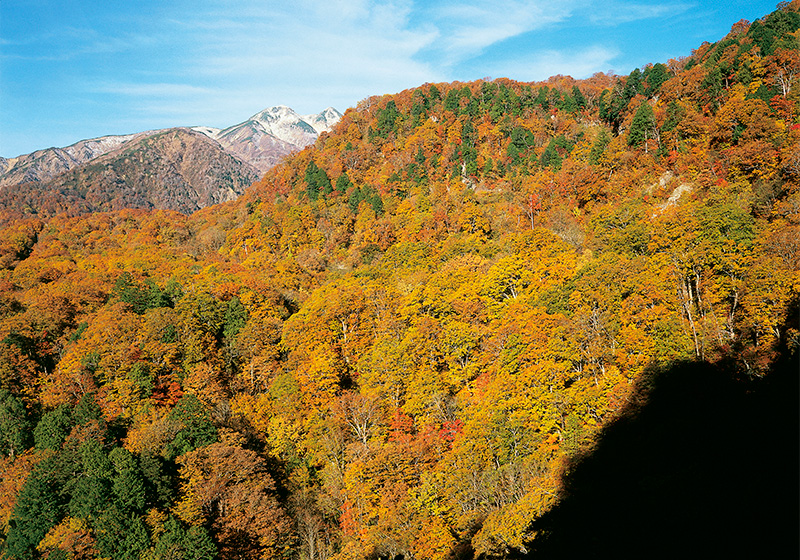
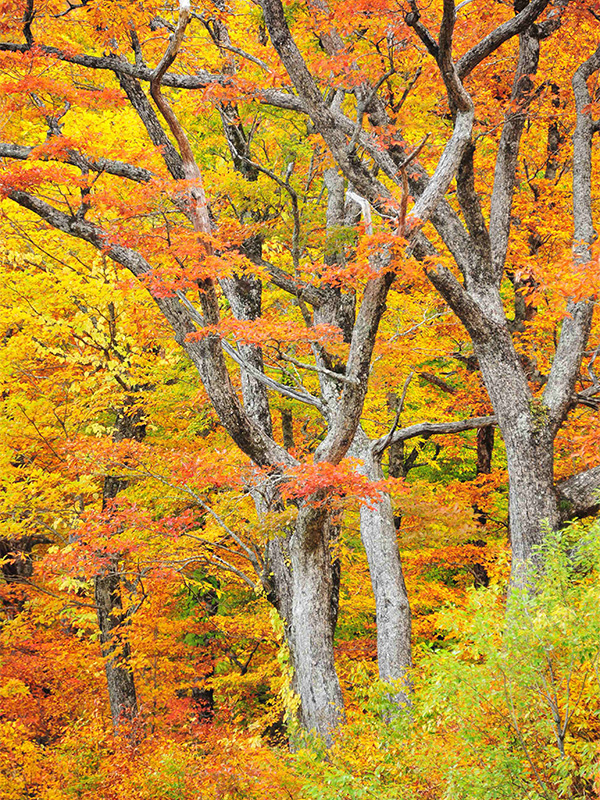
Japan is a “forest nation,” with forests covering roughly two-thirds of its land area. Among these, naturally regenerated forests display diverse characteristics depending on the region, and the Oshirakawa area is one representative example. At elevations below approximately 1,600 meters, cool-temperate deciduous broadleaf forests dominated by Japanese beech spread widely, offering rich seasonal changes—deep green in summer, autumn foliage, and snow-covered scenery in winter.
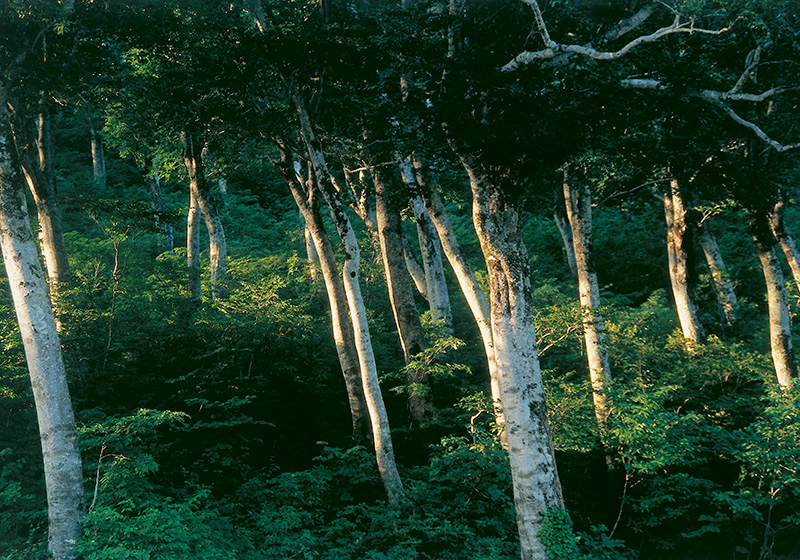
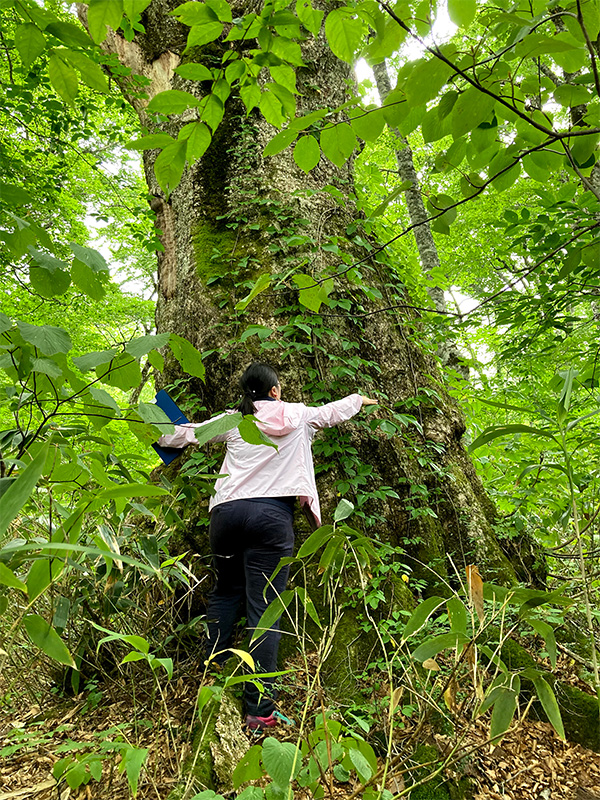
One of the most remarkable features of Oshirakawa Forest is the presence of giant mizunara oaks intermingled within the beech forest. These mizunara giants have an average trunk diameter of 116 cm, with the largest reaching 208 cm—exceptional sizes rarely found in Japan.
For comparison, they rival the size of the Oguro River Mizunara, considered the largest in Japan and designated a Natural Monument. Such massive trees are scattered throughout the area around Shiramizu Falls. While the reason this forest developed in such a way remains uncertain, considering that the largest beech trees in Oshirakawa have diameters of around 100 cm and that the forest is thought to have formed after the most recent eruption of Mt. Hakusan in 1652, the beech trees are estimated to be approximately 340 years old.
By contrast, mizunara oaks here exceed 2 meters in diameter. Studies of mizunara forests in Hokkaido suggest that trees with diameters over 80 cm are more than 400 years old; therefore, the Oshirakawa mizunara, with diameters more than twice that size, are estimated to be as old as 800 years.
This suggests that these mizunara giants may have survived the eruption some 340 years ago. Walking through the forest while imagining the post-eruption formation of Oshirakawa offers a new perspective on this landscape.
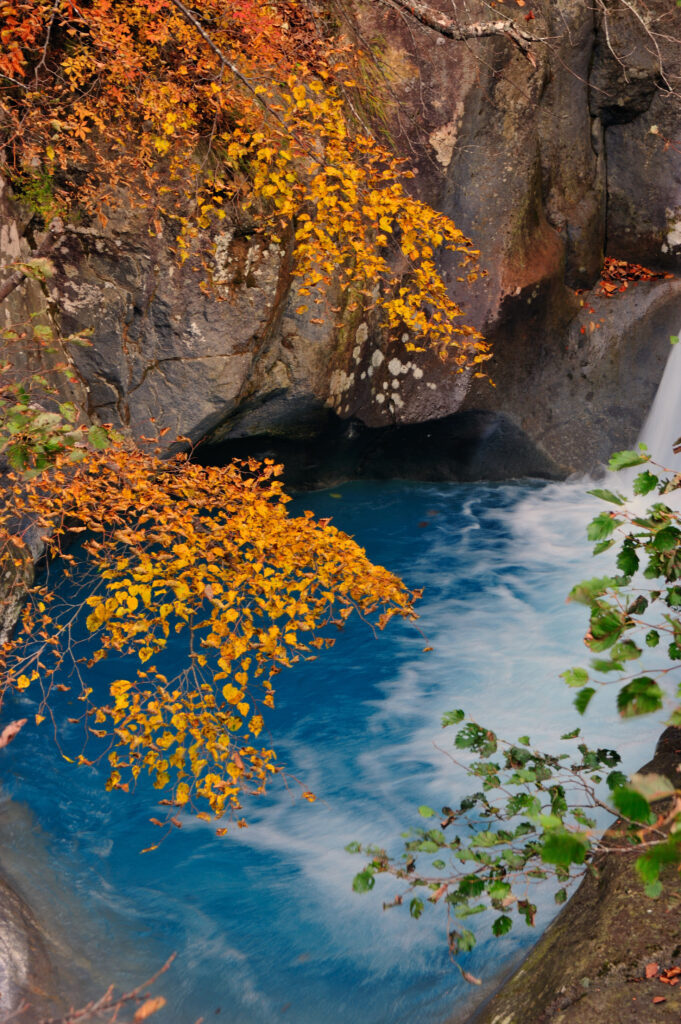
Oshirakawa Forest is not only a treasure trove of plant life; it was also a sacred area where ascetics purified themselves at Shiramizu Falls before entering the mountains for training. Protected by water and forest, the Oshirakawa environment fostered a distinctive culture in which nature and faith were deeply intertwined.
Today, Oshirakawa Forest is also attracting attention as a site for academic research. Long-term forest ecology studies conducted by Gifu University and other institutions have documented the growth of beech forests and changes in vegetation over several decades, making the area an important subject for understanding global environmental and climate change.
Rooted in land shaped by eruptions of Mt. Hakusan and nurtured over hundreds of years, the Oshirakawa Forest—rich in form and history—will continue to be preserved and passed on as a “living cultural heritage,” woven from the power of nature and the lives and beliefs of the people.