Oshirakawa Hot Spring
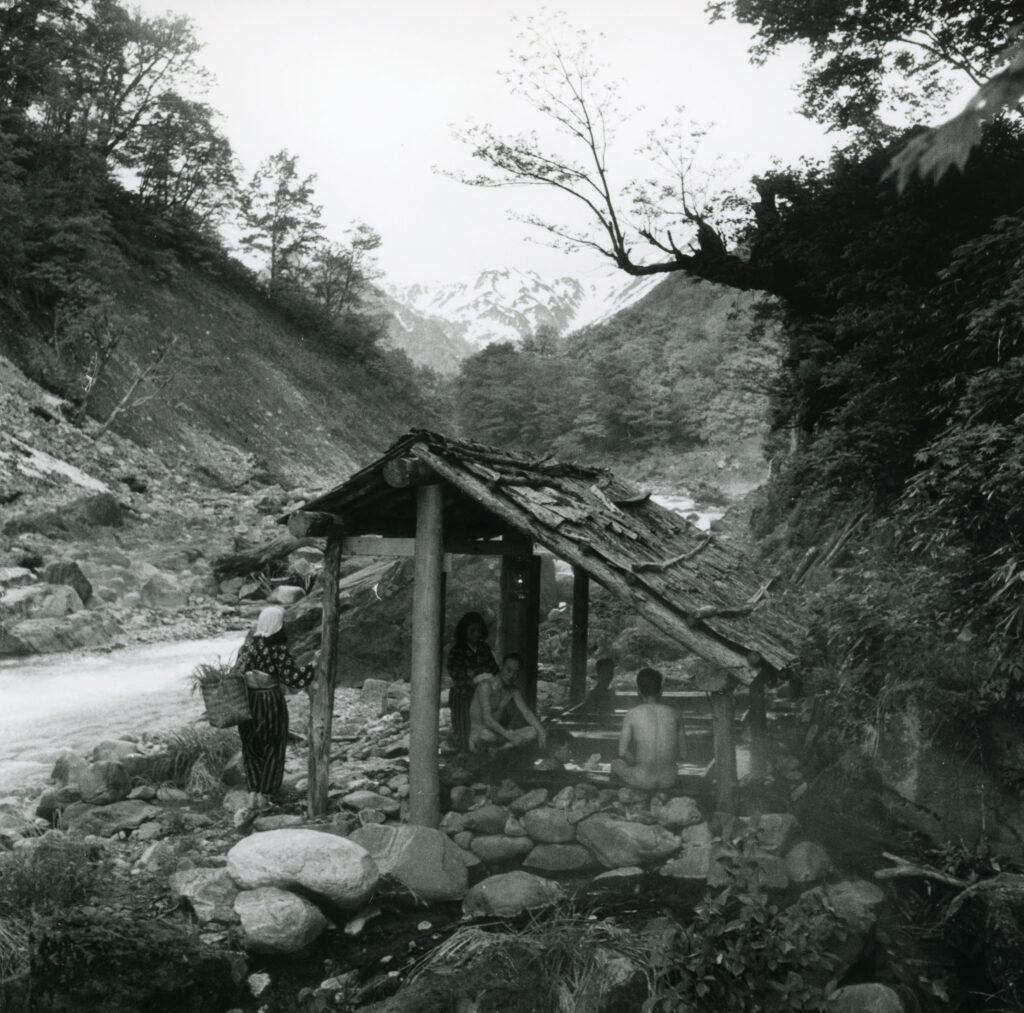
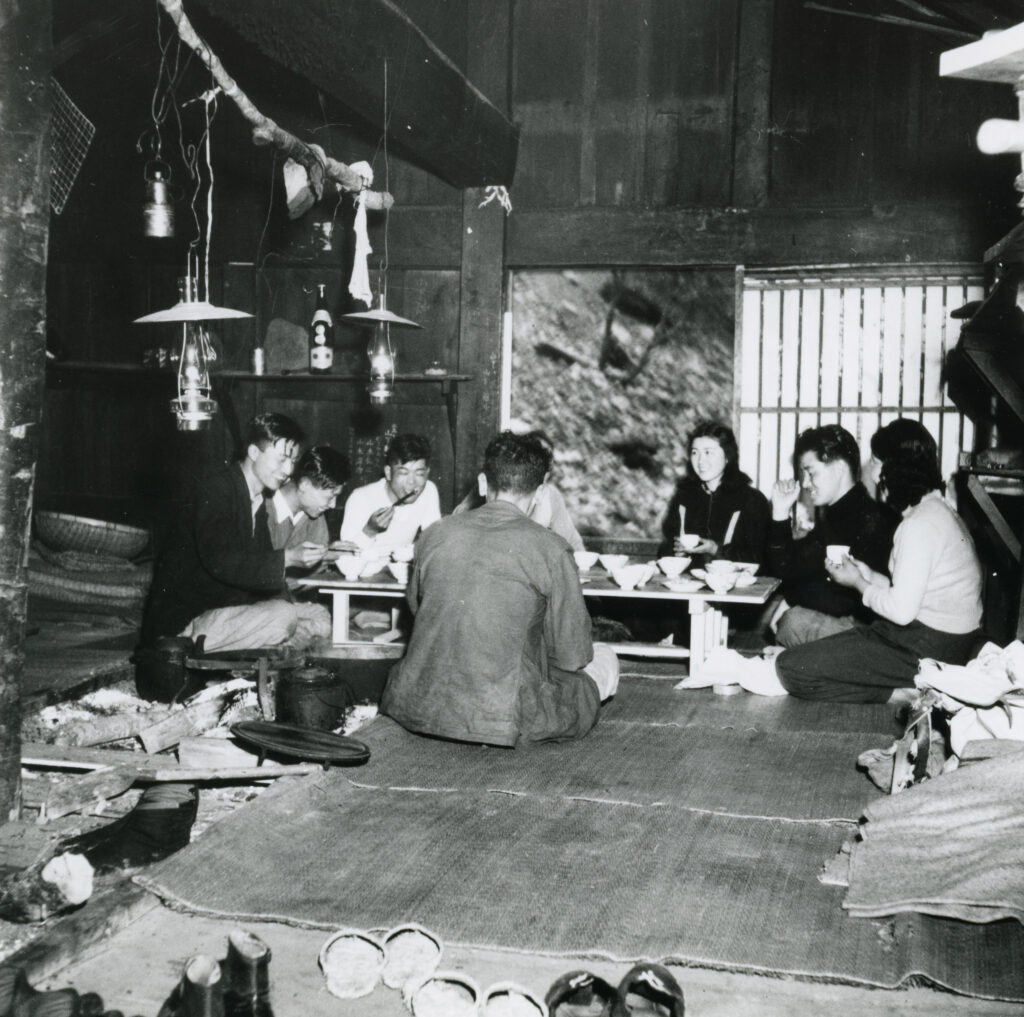
Oshirakawa Hot Spring is a natural hot spring that emerges along Yudani Valley, deeper beyond Shiramizu Falls. Its history is ancient, dating back to the medieval period. The earliest known record related to this hot spring appears in the Shoren-ji Documents, specifically a letter dated 1514 titled Letter of Masauji Uchijima (currently held by Shoman-ji Temple). This letter was written by Masauji Uchijima, lord of Kaerikumo Castle, who governed Shirakawa-go at the time, and was addressed to Shoren-ji Temple. It grants permission to lift certain prohibitions concerning Oshirakawa Hot Spring. Since ancient times, the Oshirakawa area functioned as an ascetic training ground for mountain practitioners and was regarded as a sacred precinct where women were prohibited and bathing by outsiders was restricted. The document is understood to represent official approval granted in response to Shoren-ji Temple’s petition to lift these restrictions. The existence of this record indicates that Oshirakawa Hot Spring had already been familiar as a therapeutic bathing site well before the medieval period.
This hot spring is a blessing brought about by the volcanic activity of Mt. Hakusan, formed as groundwater heated deep underground rises naturally to the surface. Its very existence symbolizes that Mt. Hakusan is not merely a volcano, but a mountain that bestows benefits upon people.
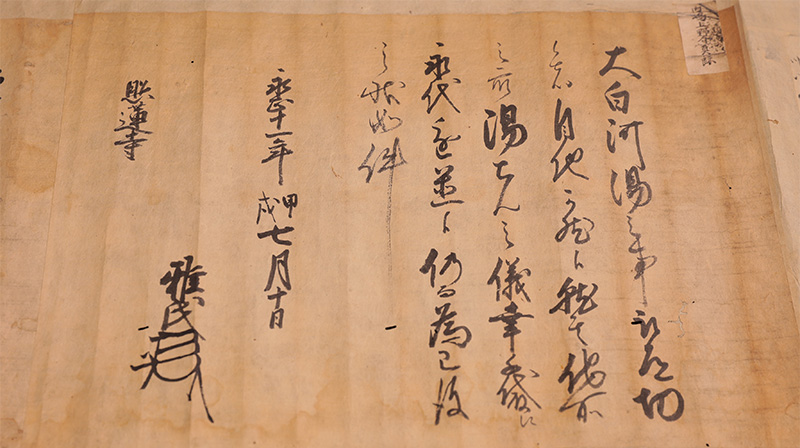
A letter addressed by Masauji Uchijima, lord of Kaerikumo Castle, to Shoren-ji Temple. The phrase "Oshirakawa hot spring" appears in the text.
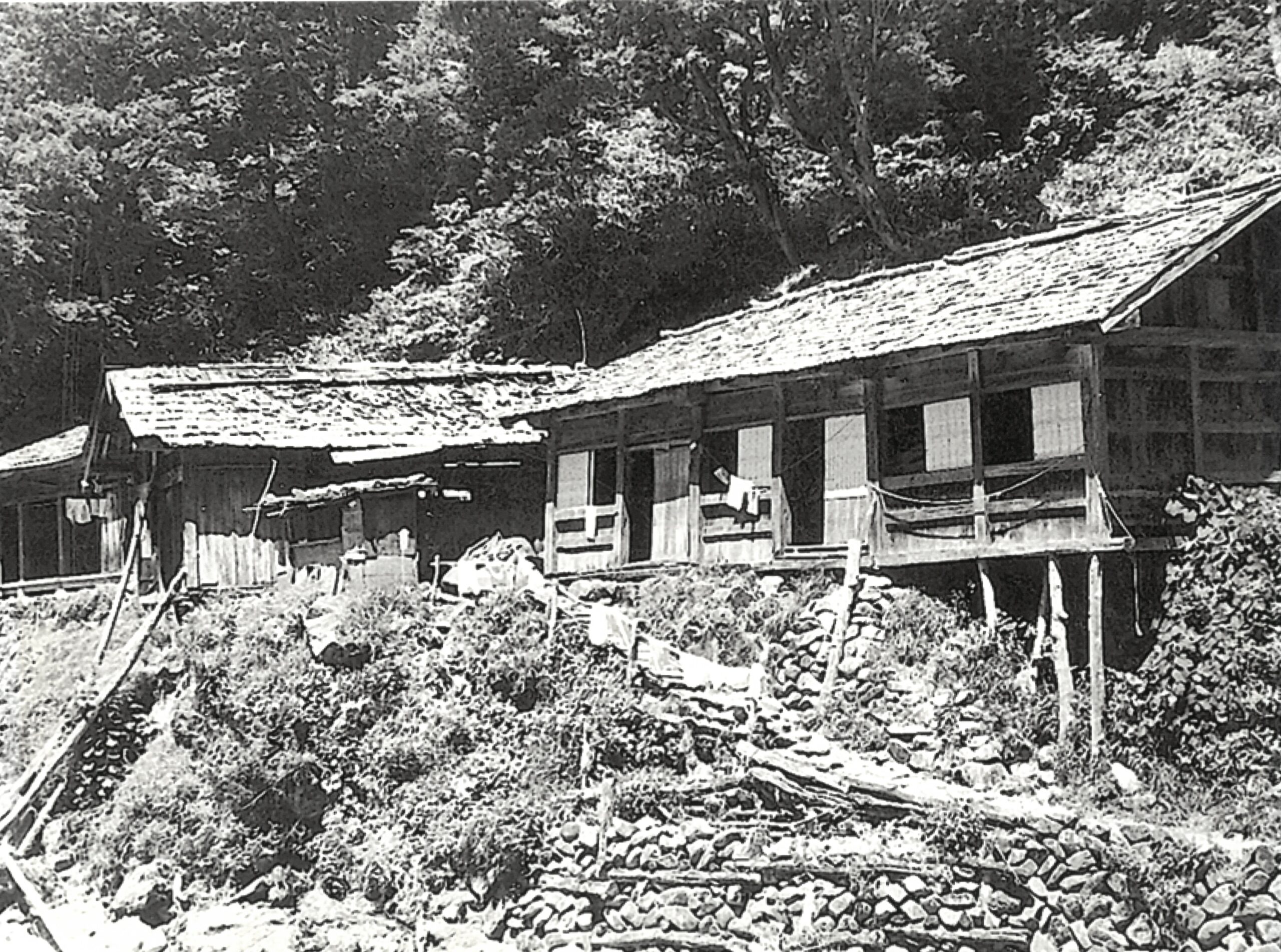
In the modern era, the construction of the Oshirakawa Dam led to the improvement of roads and access, enhancing the area’s role as a tourism resource. During the Showa period, lodging facilities were established, and increasing numbers of climbers and visitors came to the area. Oshirakawa Hot Spring, together with waterfalls, forests, and pilgrimage routes, constitutes an important element of Hakusan culture. Born of nature’s power, its waters have long connected the prayers of ascetics with the everyday lives of local people, and it continues to be preserved today as a symbol of the blessings of Mt. Hakusan.