Formation of Gassho Style Houses
Period of Establishment of Gassho Style Houses
Among the existing gassho style houses,
the oldest examples traceable back are thought to date to around the late 17th century,
based on oral traditions and construction techniques, as well as their old floor plan layouts. It is therefore believed that the prototype of gassho style houses was established at this time,
and that from the mid-18th century to the mid-19th century, when saltpeter production and sericulture became widespread, the scale of these houses grew larger, and the use of attic space advanced.
There are relatively few gassho style houses for which the exact date of construction is clearly known. However, for houses built in the late Edo period,
ridge plaques and construction records sometimes remain, making it possible to determine their construction dates.
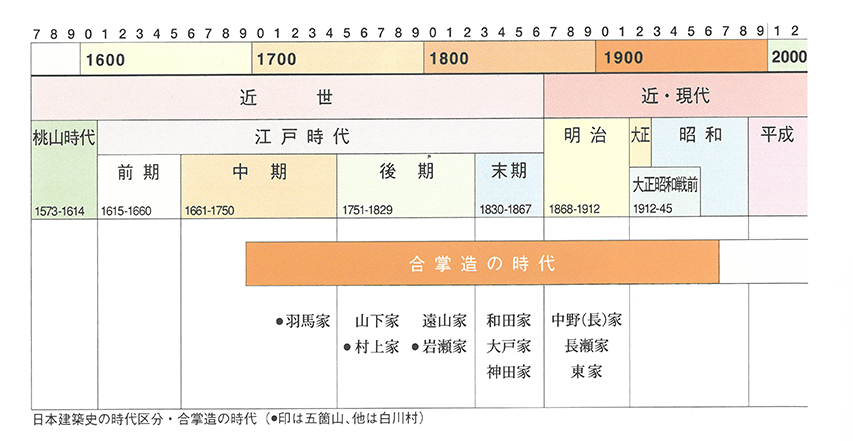
First, at Shirakawa-go’s Miboro, the Important Cultural Property Former Oto Residence (now located in Gero City) retains a ridge plaque dated 1833. This plaque bears the name of the master carpenter from Nagasaka Village in Etchu, providing valuable evidence that the Kaga Domain’s officially retained carpenters were working in the southern Shirakawa-go region. Similarly, the Important Cultural Property Former Toyama Residence in Miboro preserves a record of a house construction celebration, titled “Kasakugocho Oboecho” (House Construction Group Leader Record), dated 1850. At the Ota Residence in Omaki, Shirakawa-go (now relocated to Nagoya City), documents such as “Record of Laborers Received” and “General Labor Record” dated 1842 still remain. These include records of supplies, labor, and money contributed during the construction of the gassho style house, as well as lists of craftsmen who participated in the work and the wages they were paid. In Gokayama, at the Haba Residence in Oze, a Toyama Prefecture-designated cultural property, documents record that lumbering began in 1812, with construction completed by 1814.
Former Oto Residence before relocation to Gero Onsen Gassho Village
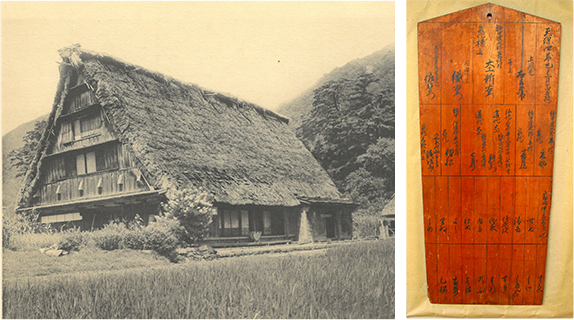
Ridge plaque of Former Oto Residence (1833)
At the center of the upper section is written: “Master Carpenter Shin'emon of Nagasaka Village, Etchu.”
Important Cultural Property Former Toyama Residence
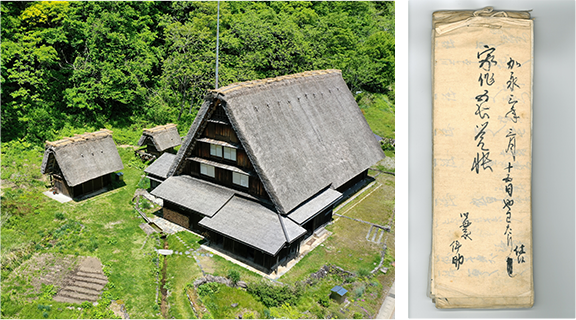
“Kasakugocho Oboecho” of Former Toyama Residence (1850)
Gocho refers to a record of a new construction celebration.
Former Ota Residence, relocated to Higashiyama Botanical Gardens, Nagoya
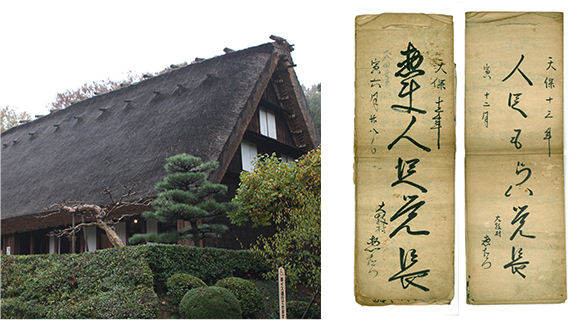
Former Ota Residence, “Record of Laborers Received” and “General Labor Record” (1842)
Haba Residence in Oze, Gokayama
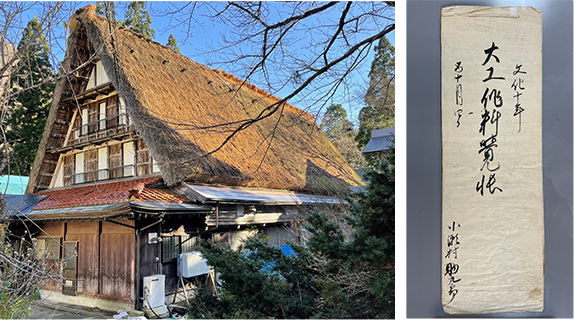
“Carpenter Wages Record” (1813)
From these examples, it is clear that each house is a large gassho style residence, with layouts that included formal shoin-style reception rooms, showing that they belong to the mature phase of gassho-zukuri construction. Many buildings from the subsequent Meiji period also survive, and the latest extant examples date from the early Showa period. From this evidence, we can conclude that the era when gassho style houses were actively being built spanned roughly 250 years, from around the late 17th century to the mid-20th century. After World War II, as the demand for sericulture declined, new gassho style houses were no longer constructed, and existing ones were increasingly replaced with homes featuring tin or tile roofs.