Learn About Gassho Style Houses (Gassho-zukuri)
Taut’s View of Gassho Style Houses

Bruno Taut, a German architect, was the first internationally renowned architect to objectively evaluate gassho style houses. Taut was a leading figure in the German modernist architectural movement, and his design of the Siedlung (housing estate) was later registered as part of the “Berlin Modernism Housing Estates” UNESCO World Heritage Site. He arrived in Japan in 1933 and spent three and a half years actively traveling across the country to study various buildings. During his stay, he published many works on Japanese architecture.
Taut visited Miboro, Shirakawa Village in 1935 during his journey from Gifu to Suruga. On May 17–18, he surveyed the Toyama family residence (now designated as an Important Cultural Property: Former Toyama Residence). Taut praised traditional Japanese farmhouses for their uniqueness, stating that while buildings like Katsura Imperial Villa and Ise Shrine were eternal, even Japan’s rural homes possessed remarkable qualities. Upon viewing the gassho style houses of the Toyama residence and others, Taut expressed his astonishment as follows.
────“These houses are structurally rational and logical, and in that respect, they are completely unique within Japan.”
(From the lecture “The Fundamentals of Japanese Architecture,” delivered in 1935 at the request of the Society for International Cultural Relations)
Taut’s assessment confirmed that the gassho-zukuri style was a distinctive architectural form not found elsewhere in Japan.
His recognition, coming from one of the world’s leading architects at the time, greatly contributed to the growing international awareness of gassho style houses.
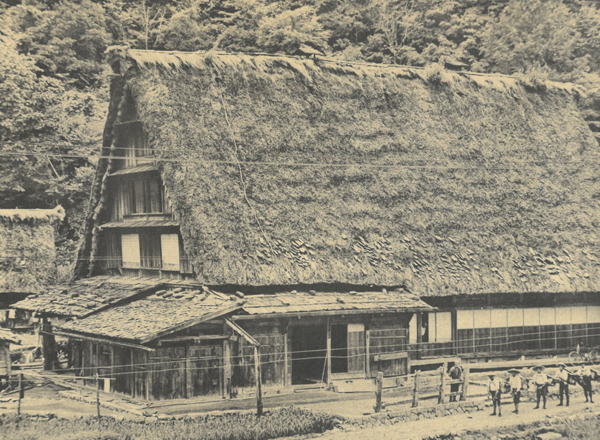
(From Volume 4 of the 1930 “Collection of Traditional Japanese Houses,” compiled by Ryokusokai)
What is “Gassho-zukuri”?
“Gassho-zukuri” is the name given to a distinctive architectural style of thatched-roof, gabled houses found primarily in the Shirakawa-go and Gokayama regions. The term gassho refers to the gesture of pressing both palms together in prayer to deities or Buddhas. In architectural contexts, it has long been used to describe a structure where two members are joined at an angle to form a mountain-like shape.
In the case of gassho style houses, the name likely originates from the buildings' rafter-frame construction or from the steeply angled gabled ends of the thatched roofs that resemble hands pressed together in prayer. The precise origin of the term is not well documented, but it is believed to have come into use around the 1930s. It is thought that researchers studying local customs or traditional housing at that time coined the term after discovering this distinctive form of dwelling, which is unique within Japan to these particular regions.
Gassho-zukuri is generally defined as follows.
“A thatched-roof house with a gabled roof using a rafter-frame construction, designed to actively utilize the attic space.”
Differences from Traditional Houses in Other Regions of Japan
Differences from Traditional Houses in Other Regions of Japan
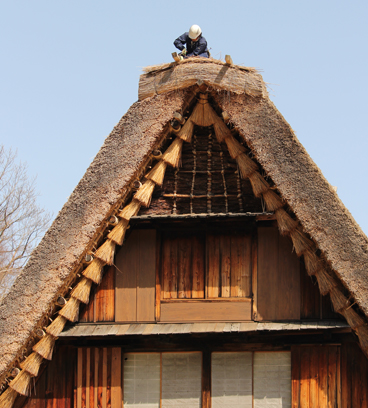
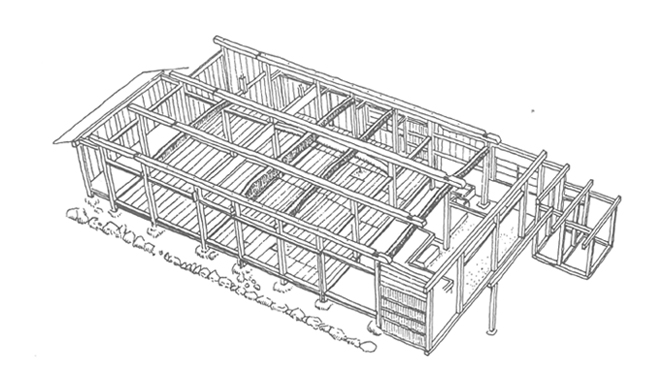
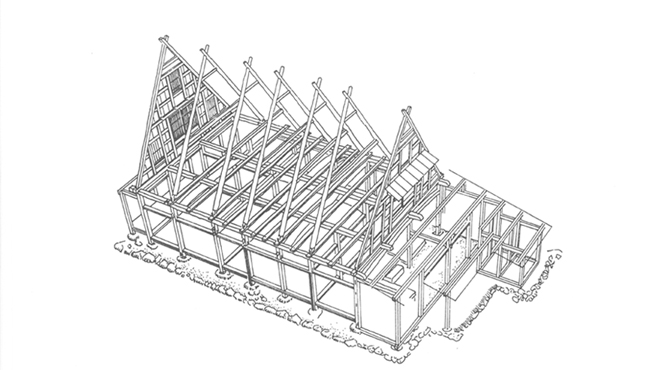
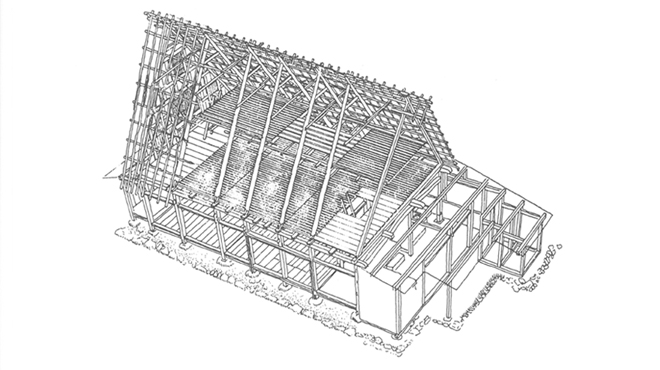
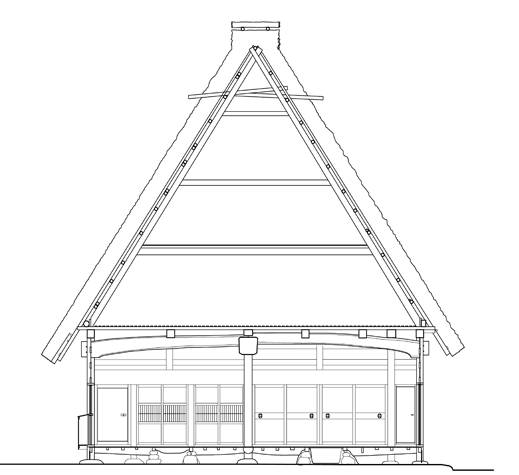
One of the key characteristics of gassho style houses is the clear structural and spatial separation between the structural framework composed of pillars, beams, and girders and the roof framing above the the forked beam base.
In most traditional Japanese houses, the elements that support the upper structure, such as struts, are integrated into the framework of pillars and beams. Sometimes, the beams themselves serve dual purposes as both structural supports and as part of the roof framework. As a result, the framework and roof framing are structurally interconnected and not clearly separated. Additionally, in these houses, there is typically no ceiling above the earthen-floored area or living quarters, creating a continuous open space where the roof structure is visible from below.
In contrast, gassho style houses feature a construction method where, excluding the lower eaves, the main framework is first built flat using beams and girders. Then, rafter bases are laid on top, and the rafter frames are assembled above them. This results in a structure where the framework and roof framing are clearly separated. Furthermore, the areas above the earthen floor and living spaces are not left open to the roof; ceilings are installed. These features distinguish gassho style homes from those in other regions and are considered one of their most notable architectural traits.
Gassho-zukuri:
Born from the Need to Use
the Attic for Sericulture
Rafter-frame construction refers to a type of roof framing in which two beams are tightly bound at the top and spread apart in an inverted V shape. The lower ends of these are pointed and simply inserted into notches on a horizontal beam laid across the main forked rafter base. In traditional Japanese folk houses, the typical roof framework is built using horizontal beams and vertical posts, with a ridge beam placed on top, followed by principal rafters and secondary rafters. While rafter-frame construction is found throughout Japan, it has a structural weakness—it doesn’t handle forces running parallel to the ridge line well. As a result, houses using this method usually feature hipped roofs or hip-and-gable roofs to compensate for this flaw. One advantage of rafter-frame construction is that it doesn’t require interior vertical posts, making the attic space wide and unobstructed. However, with hipped or hip-and-gable roofs, these spaces tend to be dark and poorly ventilated, limiting their use to simple storage.
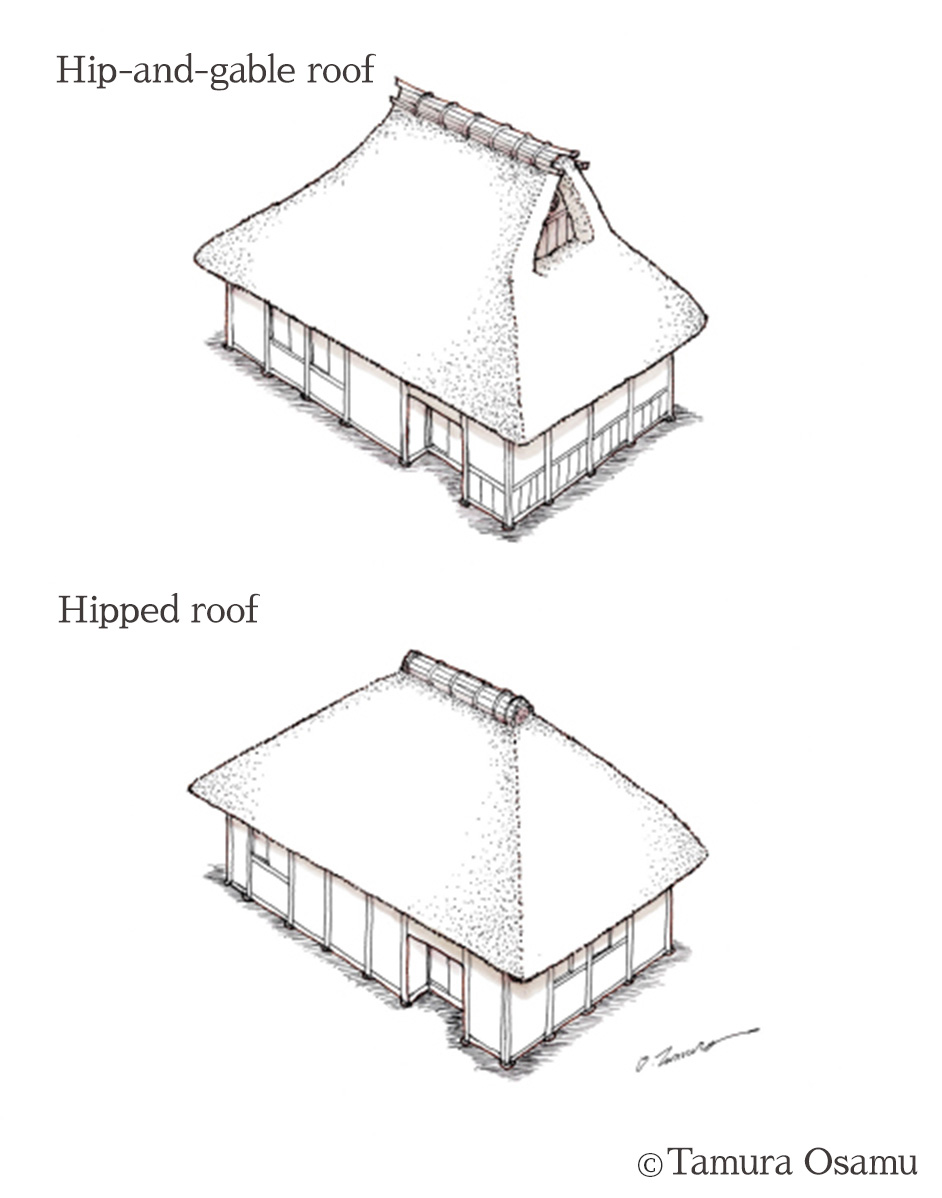
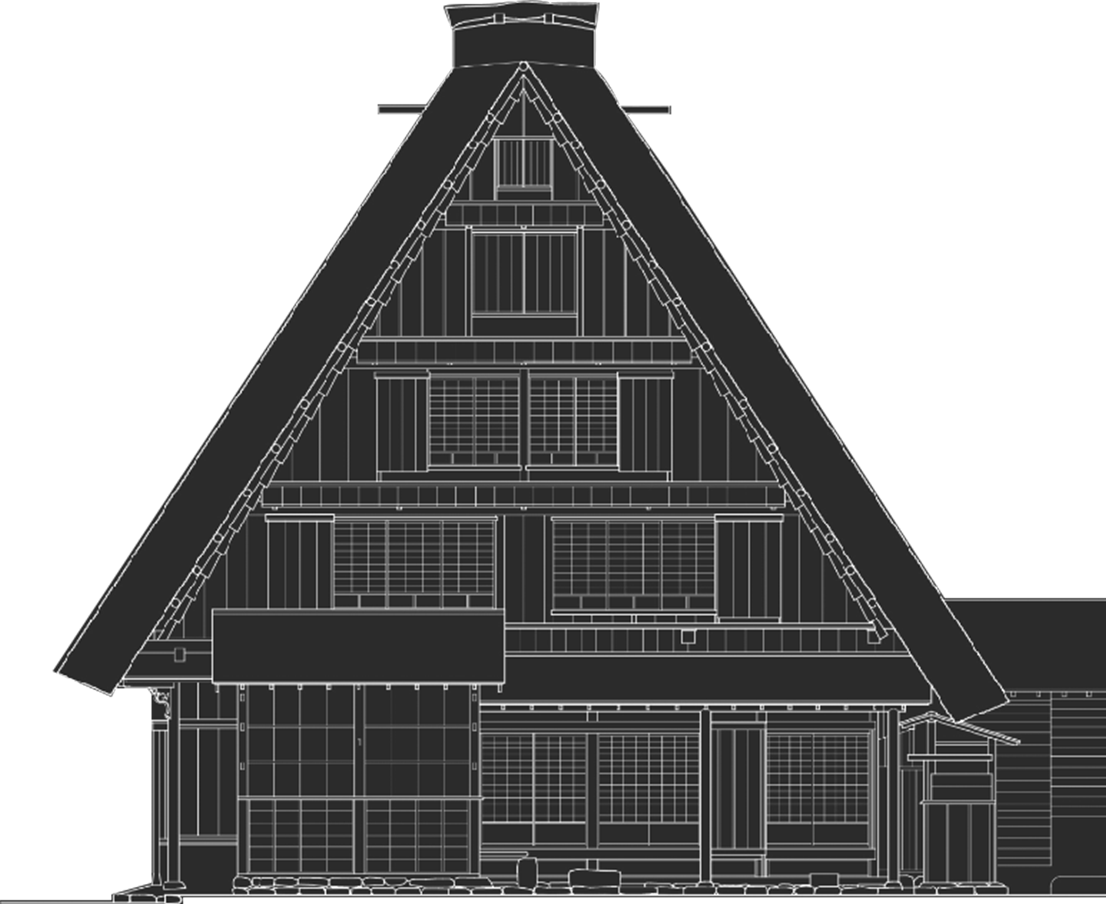
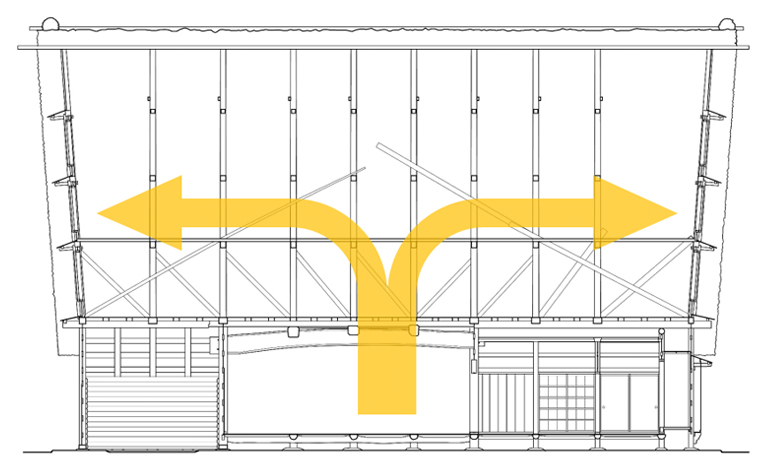
In contrast, gassho style houses were designed to actively utilize the attic for sericulture, so the roof was built in a gable roof style. This allowed for the installation of windows on the gable ends to provide light and airflow. This innovation was made possible by reinforcing the gable roof structure with multiple large and small diagonal braces beneath the roof surface. These braces offset the structural weaknesses of gable roofs when paired with rafter-frame construction. This ingenious approach combining thatch roofing, forked rafter construction, and a gable roof is a unique feature found only in the Shirakawa-go and Gokayama regions, born from local needs and conditions.
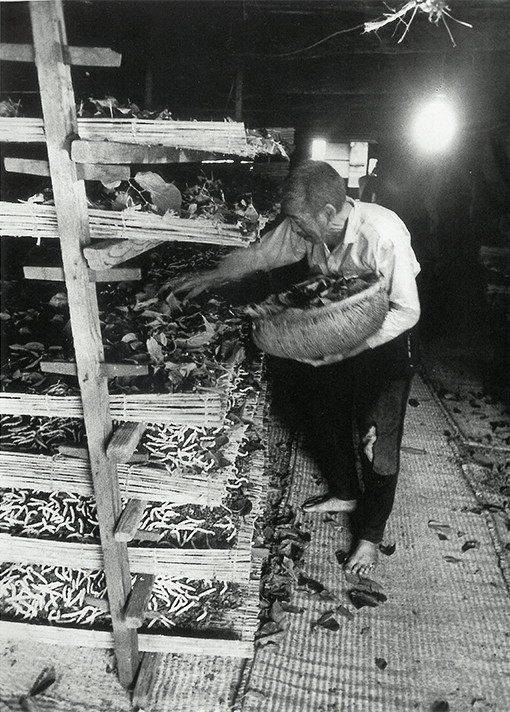
Why Raise Silkworms in the Attic?
Why did people in the Shirakawa-go and Gokayama regions go to the trouble of raising silkworms in the attic? This practice can be attributed to two key factors: land constraints and the region’s heavy snowfall. At first glance, one might think, “Why not just build a separate silkworm-rearing shed?”
However, because Shirakawa-go and Gokayama lie in narrow mountain valleys, the available flat land suitable for rice paddies or farming is extremely limited. Constructing a separate silkworm-rearing facility would mean sacrificing precious agricultural land. Moreover, adding buildings would increase the burden of removing snow from roofs during the harsh winter, something residents were understandably eager to avoid. To address these issues, they adapted the otherwise unused, dark attic space by building gable roofs that allowed for windows at the gable ends. These openings provided light and ventilation, enabling silkworm rearing without adding more buildings or consuming farmland.
Additionally, gassho style houses are thatched, which helps maintain a cool attic environment even in summer. Silkworms are sensitive to both humidity and dryness, so a space with proper air circulation, temperature, and moisture control is crucial. In spring and autumn, the heat from the hearth rises into the attic, warming it gently, while in summer the thick thatched roof acts as insulation, keeping it cool. The ventilation windows in the gable ends also help regulate the environment. Altogether, these features made the gassho style attic ideal for sericulture.
In this region, many households raised silkworms either three times a year—Haruko (spring silkworms), Natsuko (summer silkworms), and Banshu (autumn silkworms)—or twice, with Haruko and Natsuko. The timing followed this cycle: Haruko ran from early June to early July, before the start of the rainy season; Natsuko from mid-July to before the Bon Festival; and Banshu concluded by late September, before the autumn equinox. In Shirakawa-go, there is an account of a former gassho style house that, after being destroyed by fire, was rebuilt with a tiled roof. When silkworms were raised on the second floor of this new structure, especially during the Natsuko season, the temperature rose too high, causing the silkworms to stop eating and rot. This illustrates just how delicate temperature control in sericulture is, and how well the attic environment of gassho style houses suited the growth of silkworms.