Value as a World Heritage Site
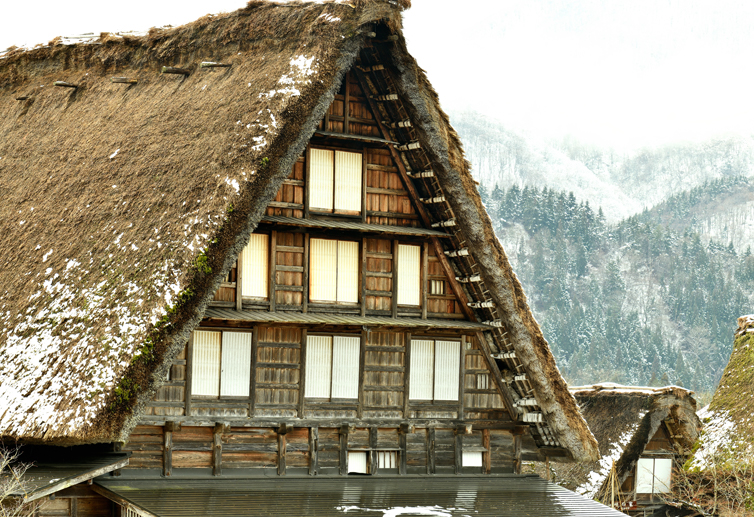
The gassho style houses (gassho-zukuri) are a rational form of dwelling that represents the most advanced stage of development within Japan’s long tradition of wooden architecture.
Japan is one of the most important countries in the world where wooden architecture flourished. The Emperor’s palaces, aristocratic residences, religious structures such as shrines and temples, and even the castles that served as military facilities in the age of the samurai were all built of wood.
Similarly, in Japan, the homes of ordinary people—minka—were almost entirely made of wood. These can broadly be divided into the urban houses of merchants and the rural or fishing village dwellings, with this heritage site belonging to the latter category of rural settlements and their houses.
Traditional rural houses in Japan are typically single-storied with a side-gabled entrance, earthen walls between exposed posts, thatched roofing, and hipped roofs. However, houses with front-gabled entrances, fully plastered walls, wooden siding, wooden shingle roofing, and hipped-gabled or gabled roofs also exist. The combinations of these features produced a wide range of regionally distinctive rural house styles. Each of these diverse and highly developed forms of architecture is something Japan can proudly present as a cultural property of universal value.
When viewed as a whole, Japan’s rural dwellings, though diverse in form, tend to converge into a certain image: houses of modest scale, with relatively low ridges, roofs that are not overly steep, and structures that seem to press close to the ground, blending with nature rather than standing against it.
In contrast, the gassho style houses of Shirakawa-go and the Gokayama region are an exceptionally unique form not found anywhere else in Japan. They represent one of the most highly developed and rational types of traditional dwellings in the country.
The gassho style houses of Shirakawa-go and Gokayama are extremely distinctive in form, unlike those of any other region in Japan.
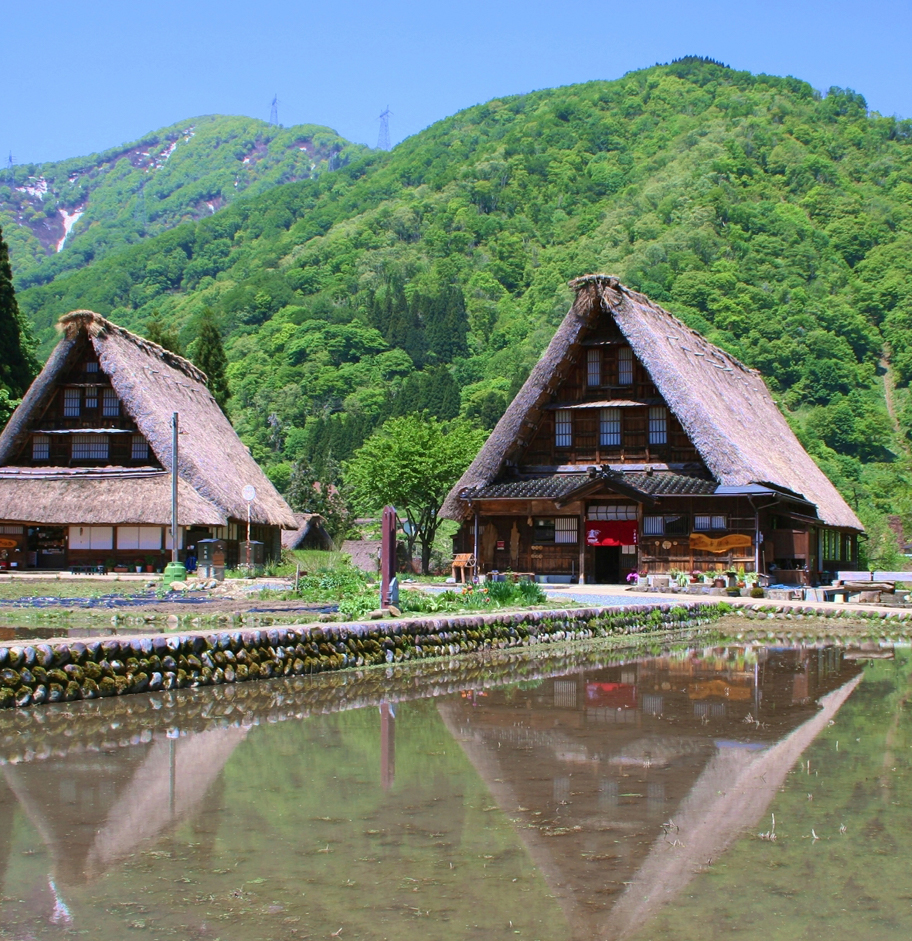
Compared to farmhouses in other areas, they are much larger in scale, with steeply pitched thatched gabled roofs angled at nearly 60 degrees, giving them an exterior appearance that seems to confront nature directly.
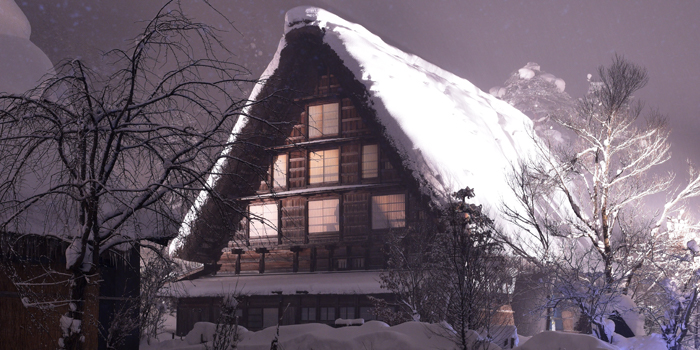
In ordinary Japanese farmhouses, the attic space (beneath the roof) is usually not used. In contrast, gassho style houses make active use of the attic, which is divided into two to four levels, as workspaces for sericulture. The steeply pitched roofs and the rafter-frame construction were designed to create larger attic spaces. In addition, the gabled roof design allowed for openings at the gable ends, ensuring ventilation and light within the attic. These features are extremely unusual in Japan.
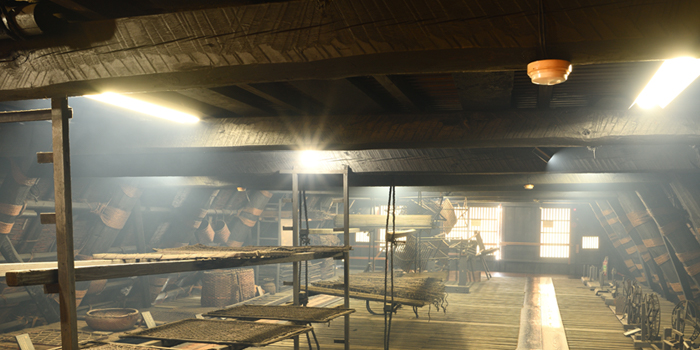
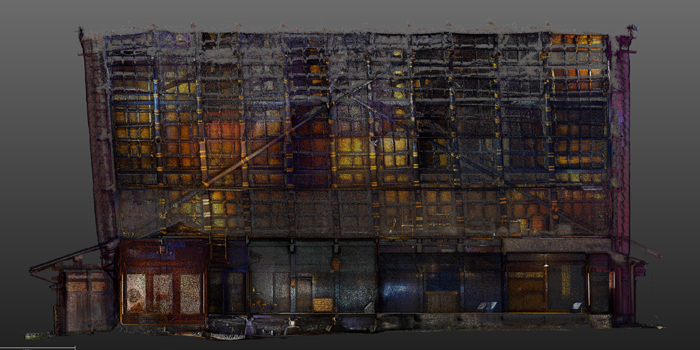
By using a gabled, steeply pitched rafter-frame construction, structural weaknesses would normally arise. These were overcome by reinforcing the roof surface with diagonal braces, binding the entire sheathing together as one unit. This technique is unique, found nowhere else in Japan.
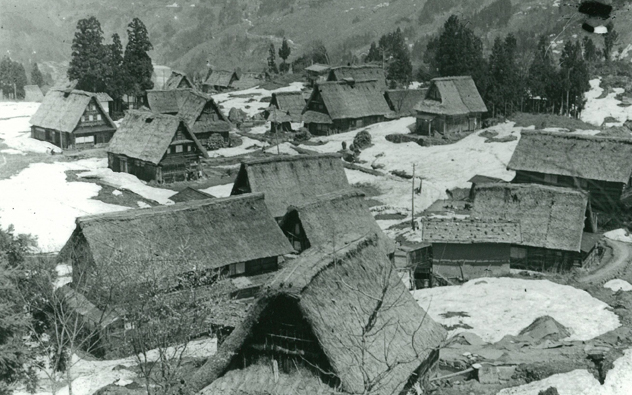
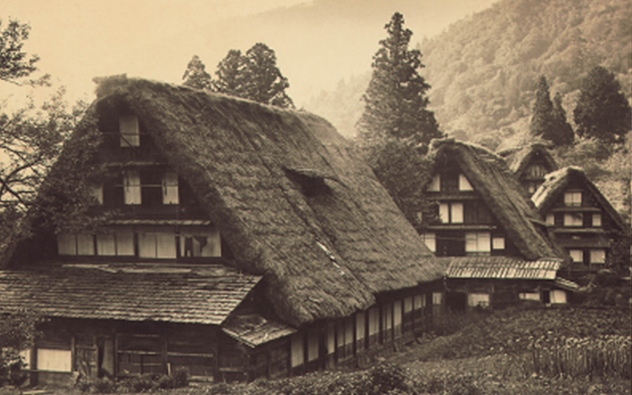
The Last Hidden Region in Japan
Shirakawa-go and the Gokayama region are surrounded by steep mountains and valleys in Japan’s mid-mountain areas, making them extremely difficult to access. Until the 1950s, contact with the outside world was very limited, and the area was once called “the last hidden region left in Japan.”
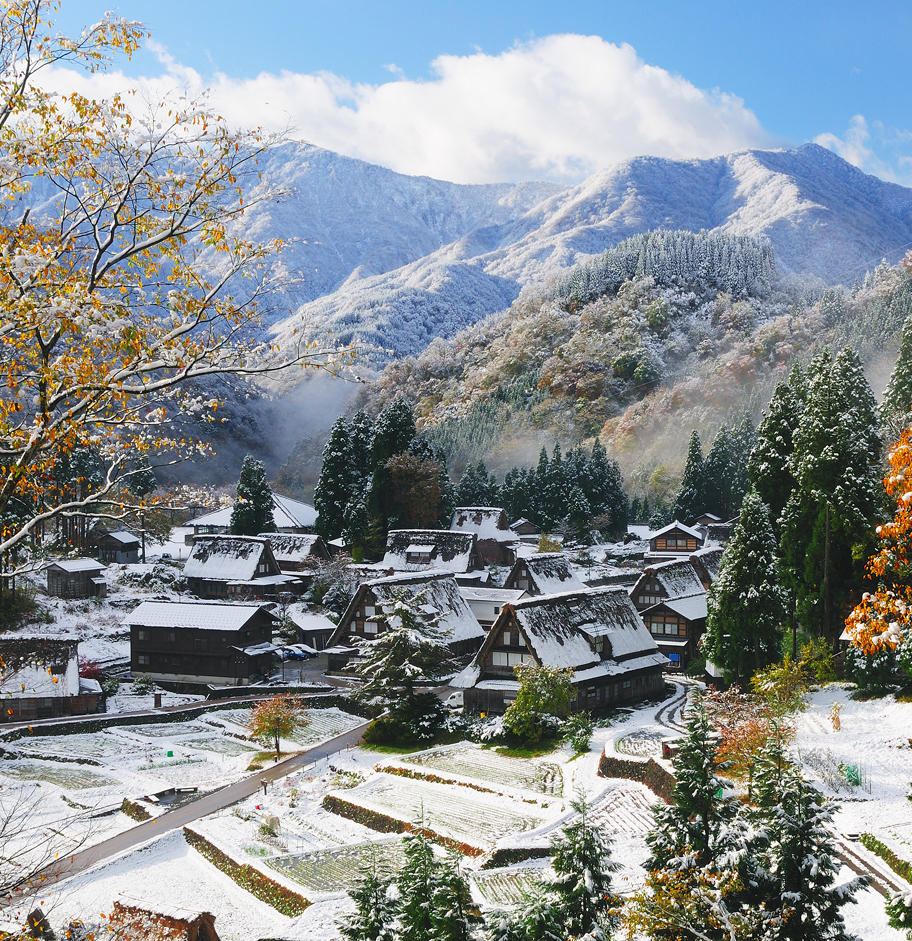
For this reason, Shirakawa-go and Gokayama, linked by the Sho River, developed a very unique cultural sphere, grounded in the spiritual bonds of the Jodo Shinshu Buddhist faith and expressed in shared social systems and daily practices. The most striking manifestation of this unique culture is the gassho style houses—large, thatched gabled farmhouses—and the distinctive rural landscape formed by their clusters.
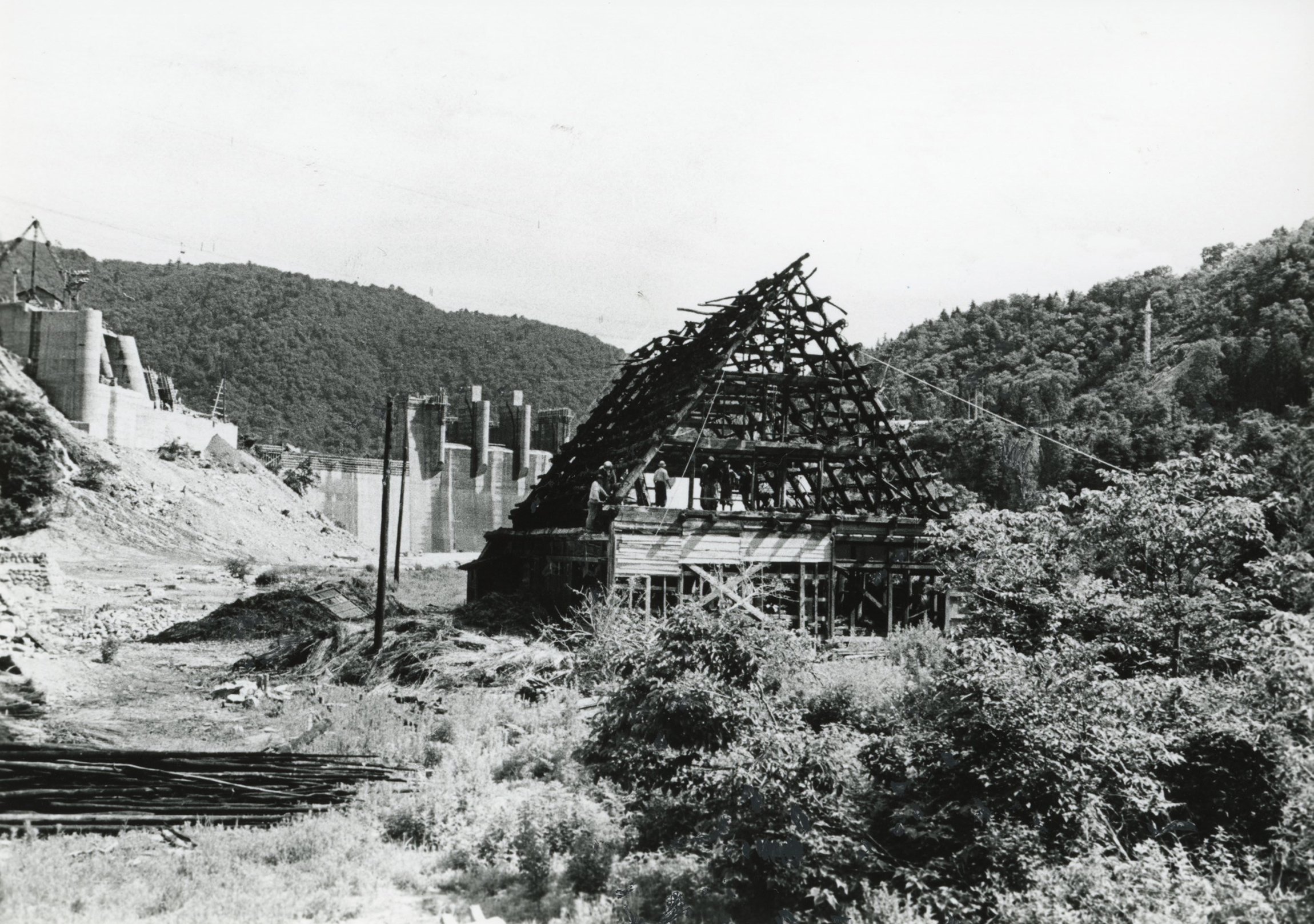
(Photo by Koyo Hosoe, collection of Gifu Prefectural Museum of Art.)
(Photo by Koyo Hosoe, collection of Gifu Prefectural Museum of Art.)
An Extremely Rare Existence
Gassho style houses are a form of dwelling found only in Shirakawa-go and the Gokayama region. Even at their peak in the late 19th century, there were only about 1,850 houses in existence. At the time, there were about 5.5 million farm households in Japan, and by comparison, the proportion of gassho-style houses (only 0.03%) made them an extremely rare presence.
Though few in number, the gassho style houses and villages of this region vividly expressed local identity. However, following Japan’s rapid economic growth after World War II, social and economic changes led to their sharp decline, bringing the houses and villages of Shirakawa-go and Gokayama to the brink of devastation.
Today, the only villages preserving the former settlement landscape are the three that have been placed under protection: Ogimachi, Ainokura, and Suganuma.
Outstanding Universal Value Required for World Heritage Registration
To be inscribed as a World Heritage Site, a property must possess “outstanding universal value from the point of view of history, art, ethnology, or anthropology.” For the evaluation of "universal value," it must meet at least one of the six cultural criteria defined by the World Heritage Convention, and it must also demonstrate authenticity.
This property has been recognized as possessing “outstanding universal value” under cultural criteria (IV) and (V).
Ⅳ
An outstanding example of a type of building, architectural ensemble, or landscape which illustrates a significant stage in human history.
Ⅴ
An outstanding example of a traditional human settlement or land use which represents a culture, especially when it has become vulnerable under the impact of irreversible change.
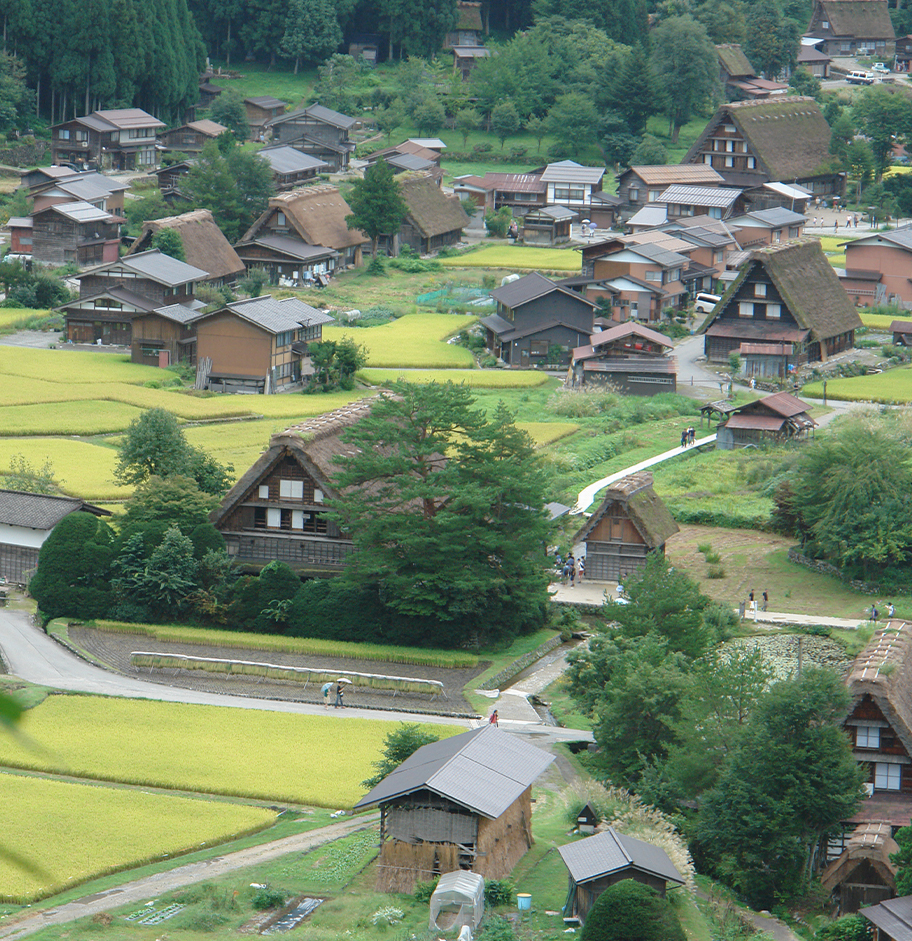
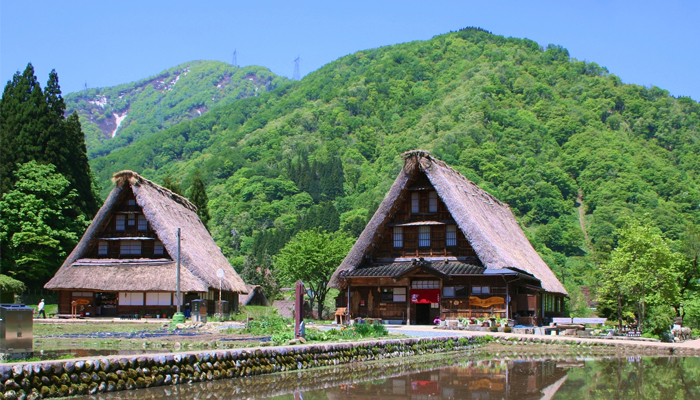
Reasons Why Ogimachi, Ainokura, and Suganuma Demonstrate “Outstanding Universal Value”
01
Ogimachi, Ainokura, and Suganuma are among the very few remaining villages that preserve the original settlement landscapes of gassho style villages, most of which have already disappeared.
02
Preserving the three villages together as a group demonstrates that such settlements once formed a wider cultural sphere across this region.
03
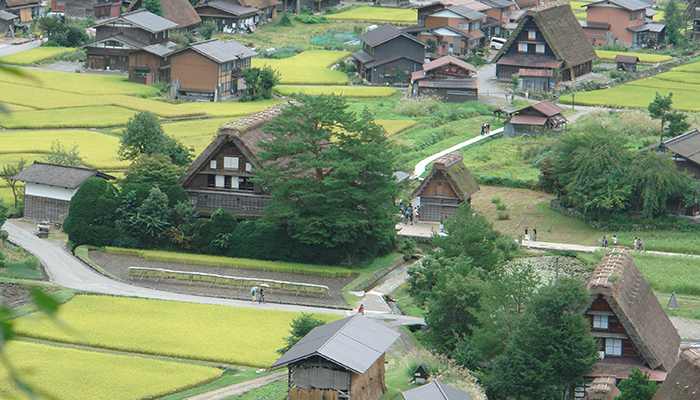
The three villages respectively represent large-scale, medium-scale, and small-scale settlements, serving as evidence of the diversity of scale among gassho-style villages.
04
Even within the same gassho style houses, those in Shirakawa-go are side-gabled, whereas those in Gokayama are front-gabled. In Gokayama, eaves are attached to the gable ends, while in Shirakawa-go they are not.
In Shirakawa-go, the gable-end walls of the attic are slanted, whereas in Gokayama they are not. Gokayama houses typically include an earthen-floor space, while Shirakawa-go houses have little or none. These regional differences show that even within the same cultural sphere, variations existed depending on locality, and preserving the gassho style houses of Shirakawa-go and Gokayama serves as evidence of that fact. Furthermore, in Ogimachi there are many drying sheds as outbuildings, while in Ainokura and Suganuma storehouses are more prominent than drying sheds, creating differences in village landscapes.