Kaya (Thatch) Fields
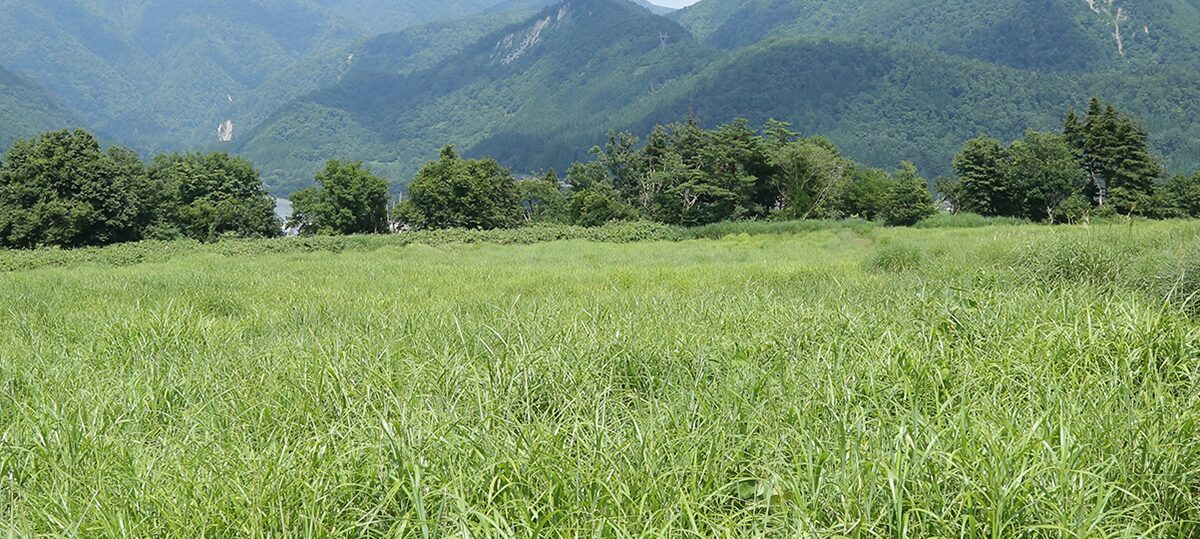
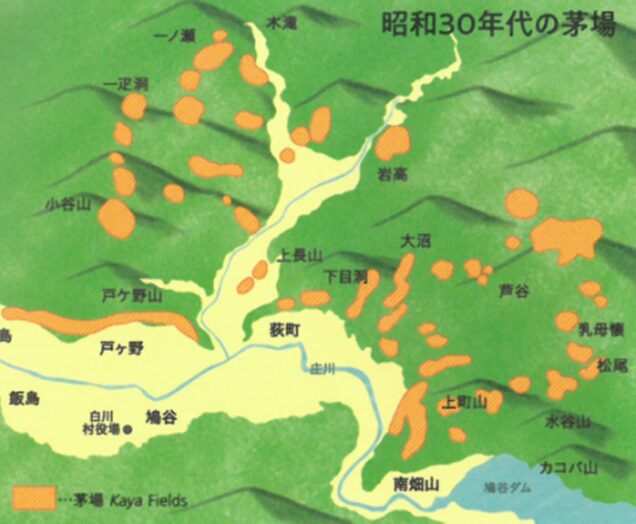
The thatch used for roofing gassho style houses is harvested from mountainside kayaba thatch fields. Today, susuki grass is the main material, though in the past kariyasu grass was more common. Kariyasu thrived in higher elevations with good sunlight and red soil.
The Four Seasons of Thatch Fields
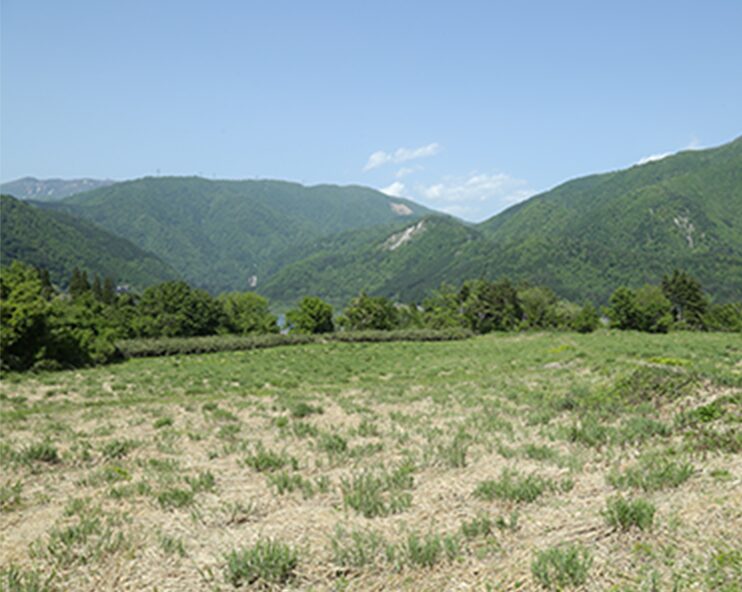
May
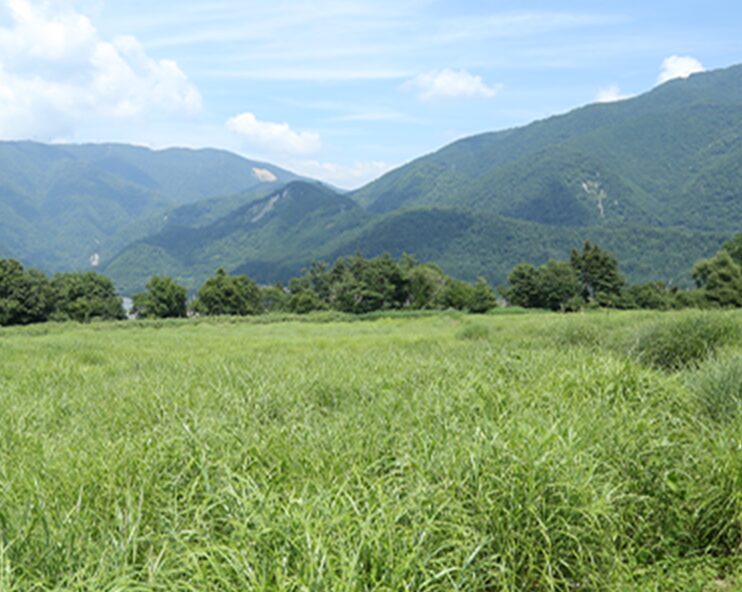
July
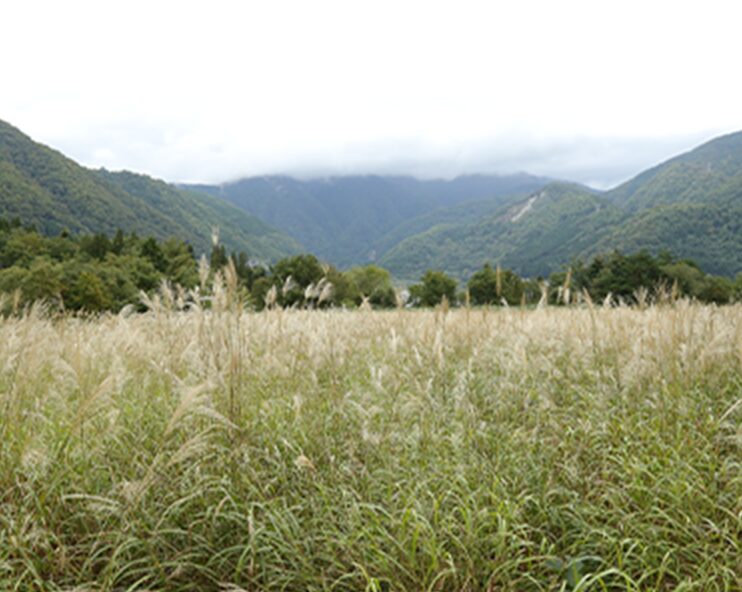
October
Since flat fields in the village were reserved as precious farmland for self-sufficiency, thatch fields were maintained on mountain slopes. Harvesting takes place in late October, once the leaves have turned brown. After surviving the harsh winter, the first shoots appear in early spring, when snow still lingers in the fields. By summer, the fields are filled with lush, green susuki swaying in the wind.
Thatch Harvesting
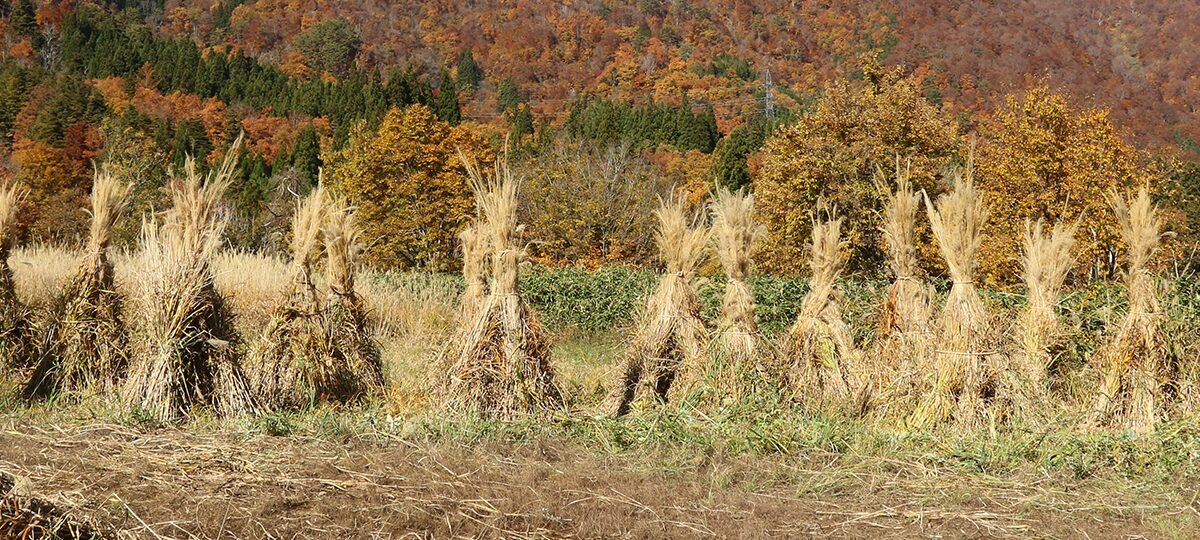
Freshly Cut Thatch
The best time for harvesting is the one-month window between the end of the Doburoku Festival in late October and late November, when the first snow begins to fall. Thatch is bundled into units called ichi-shime, tied lightly with a 2-ken (3.6 m) rope. One shime became the standard unit of trade. When divided into smaller bundles, one shime equals about 33 bundles. If the bundles are made larger, fewer will fit into a shime. An experienced harvester could cut about 60–100 bundles per day.
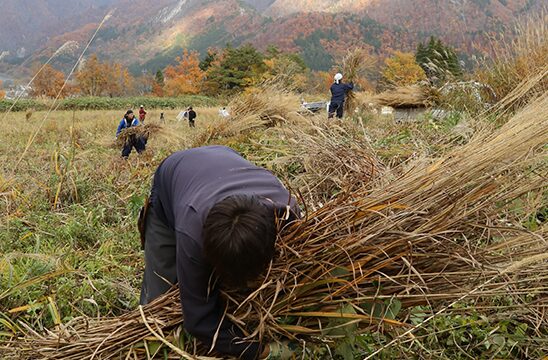
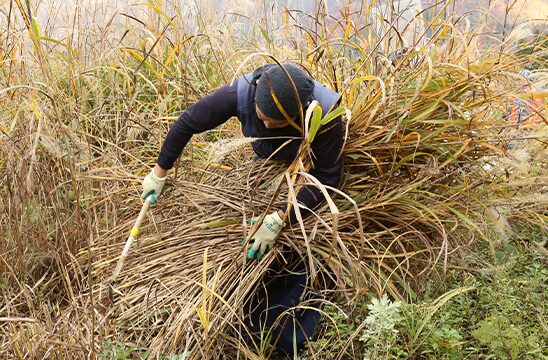
October
Traditional Methods of Transporting Thatch
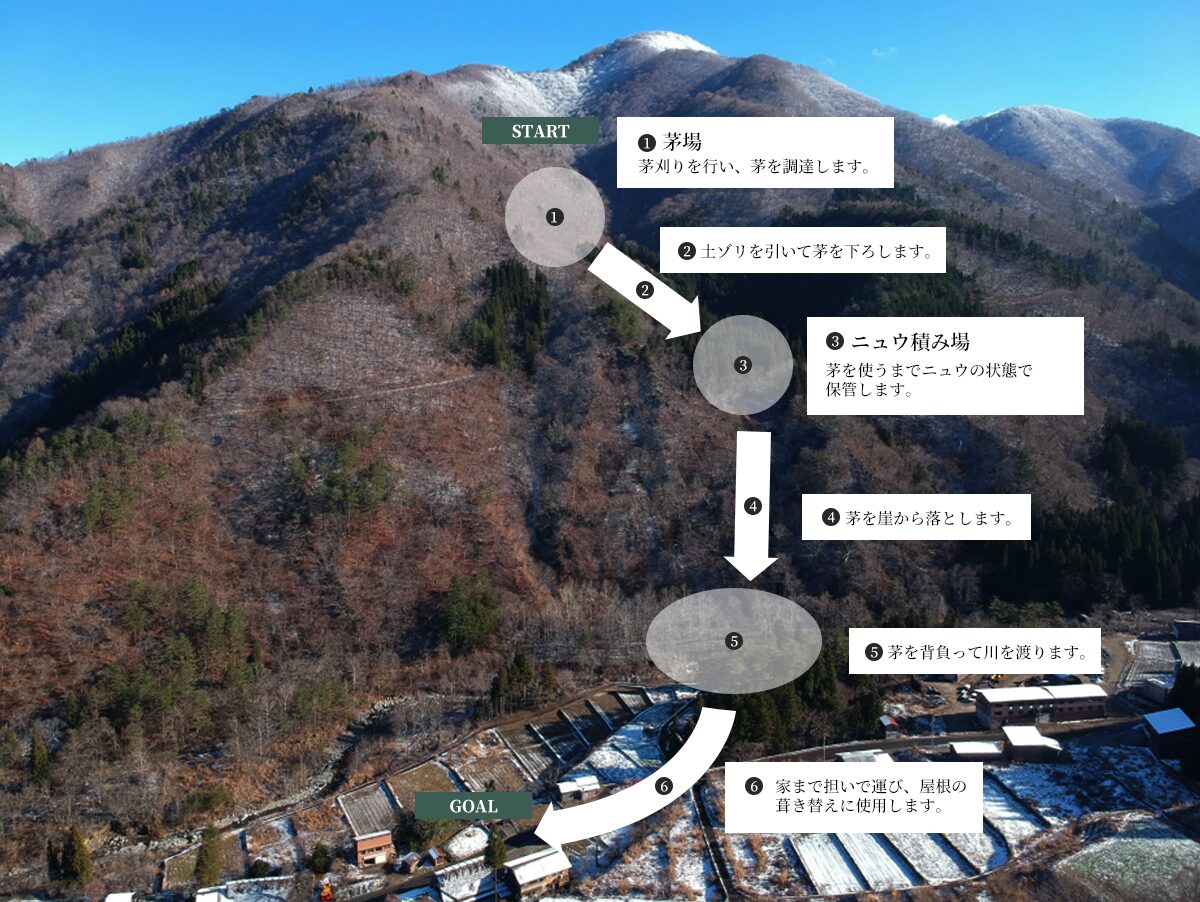
Example from Ippiki Valley
Until around 1975, the transport of thatch was carried out entirely by hand, as seen in old photographs. Moving bundles of thatch from the mountain slopes down to the village required enormous effort. Here is a step-by-step look at how thatch stacks were bundled and transported.
- Thatch Field
Thatch is harvested and gathered. - The bundles are lowered down the slope using a wooden sled.
- Thatch Stacking Area
The thatch is stored in large stacked piles until needed. - The thatch bundles are dropped down from cliffs.
- The bundles are carried on the back and taken across the river.
- They are carried all the way to each household, where they are used for roof re-thatching.
Stacking into Nyu
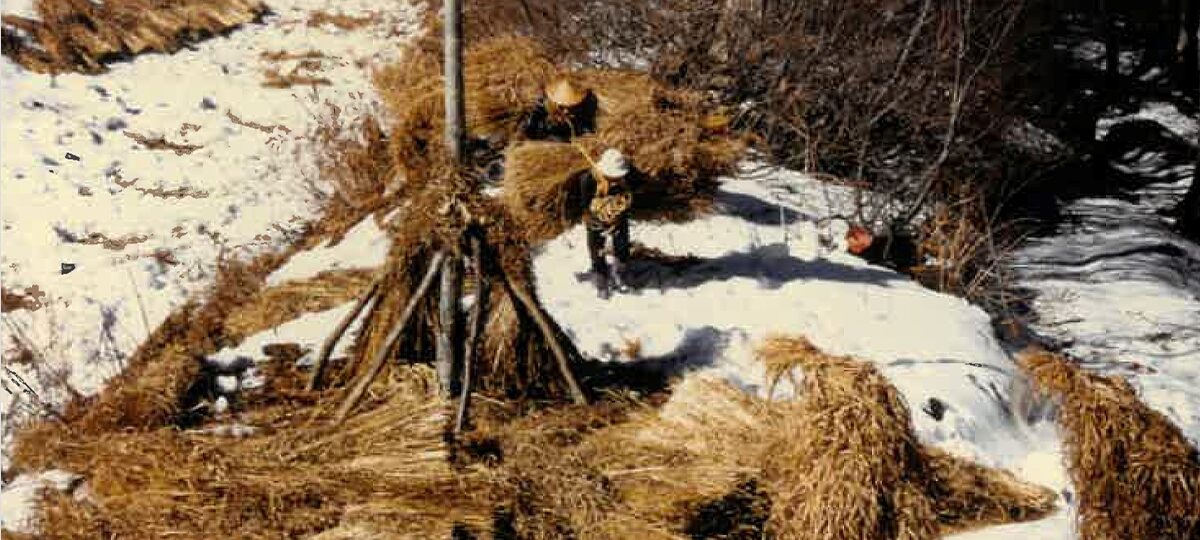
Thatch was carried to the nyu pole and stacked there.
After harvesting in autumn, the thatch was stacked on-site in the fields. A sturdy branch of beech or other hardwood cut from the mountain was set upright as the nyu pole, around which thatch bundles were leaned. The second layer was placed horizontally, with more bundles stacked up, and finally a sloped “cap thatch” was added on top. The stack was tied tightly with rope around the pole to prevent snow from getting in. Each nyu could hold about 300 bundles of thatch. The stacks were left in place, buried under snow throughout winter, until spring. When the snow hardened into katteko (a firm snow surface in early spring), the buried nyu were dug out. From there, bundles were carried down to the village using methods such as the “mukade” (centipede) or “hikigiri” (paired carrying).
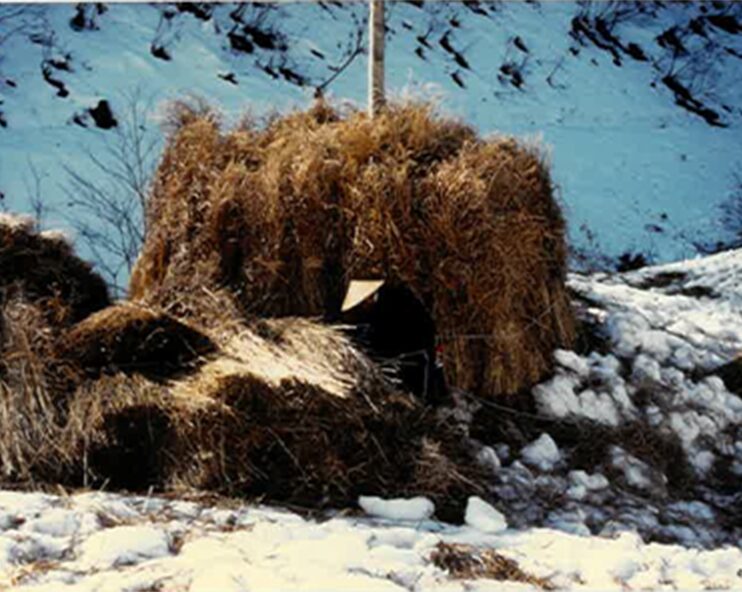
Thatch bundles are leaned upright against the nyu pole.
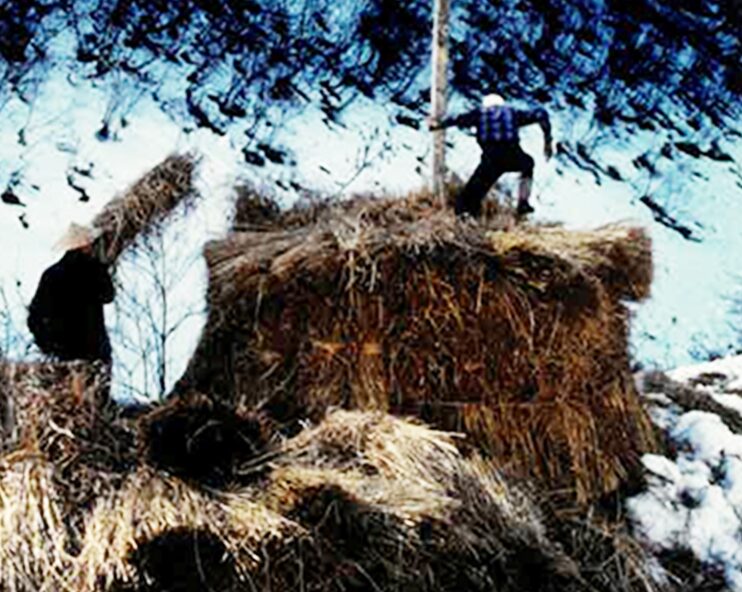
From the second layer upward, bundles are laid horizontally.
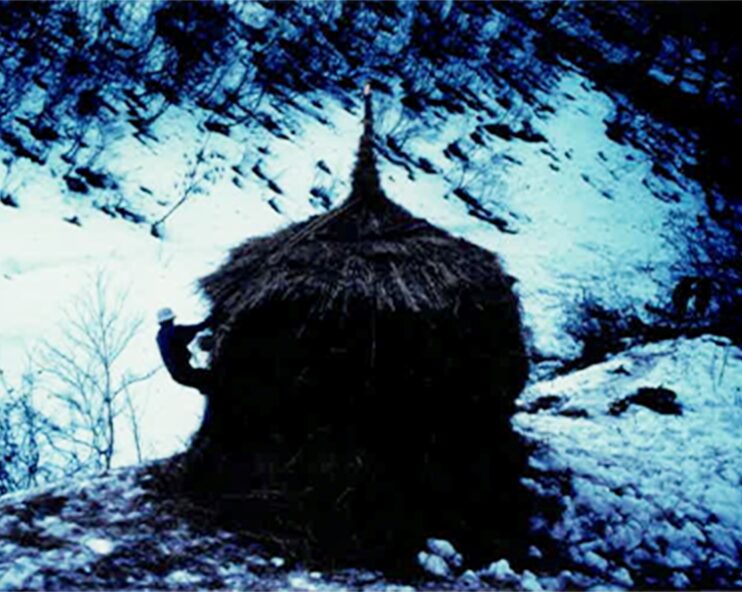
Finally, a cap layer is added to complete the stack.
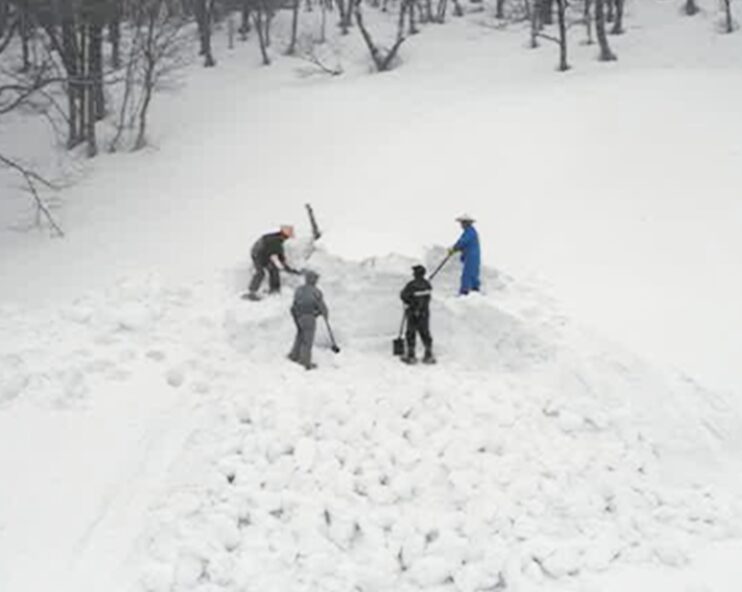
In early spring, when the snow surface hardens into katteko, the buried nyu are dug out.
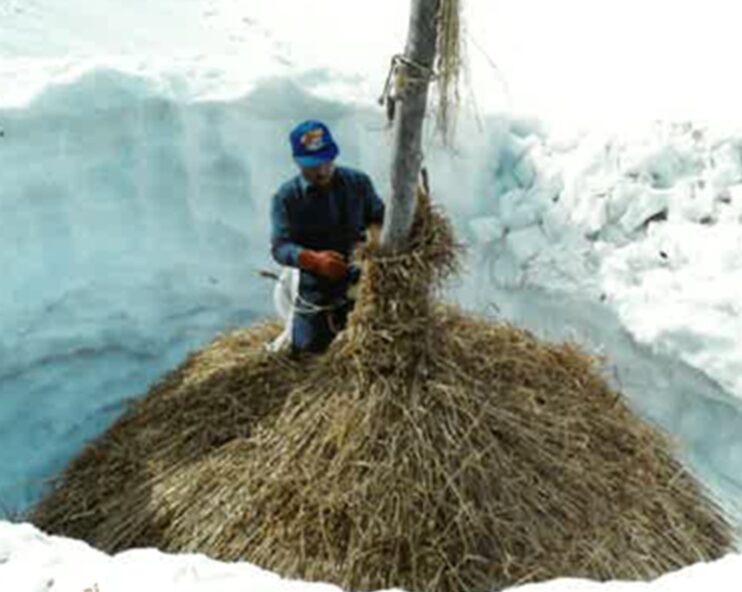
Bundles are removed from the nyu and the transport process begins.
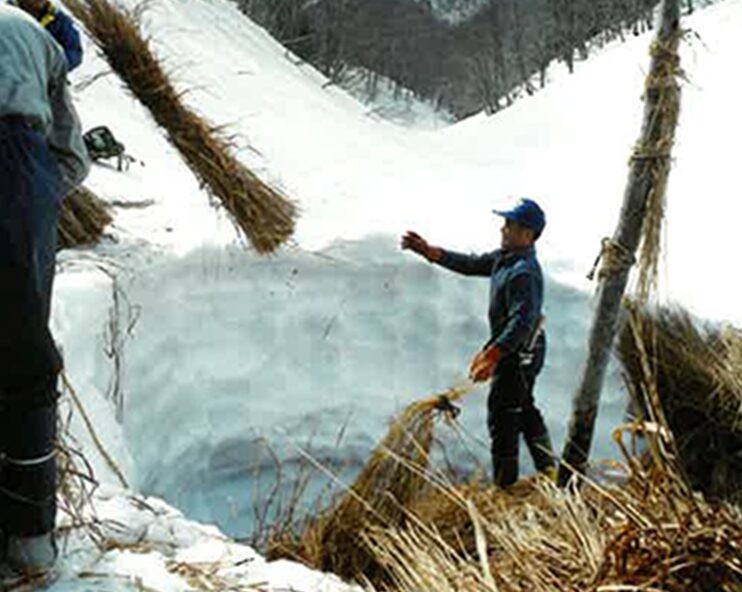
The Mukade and Hikigiri Methods
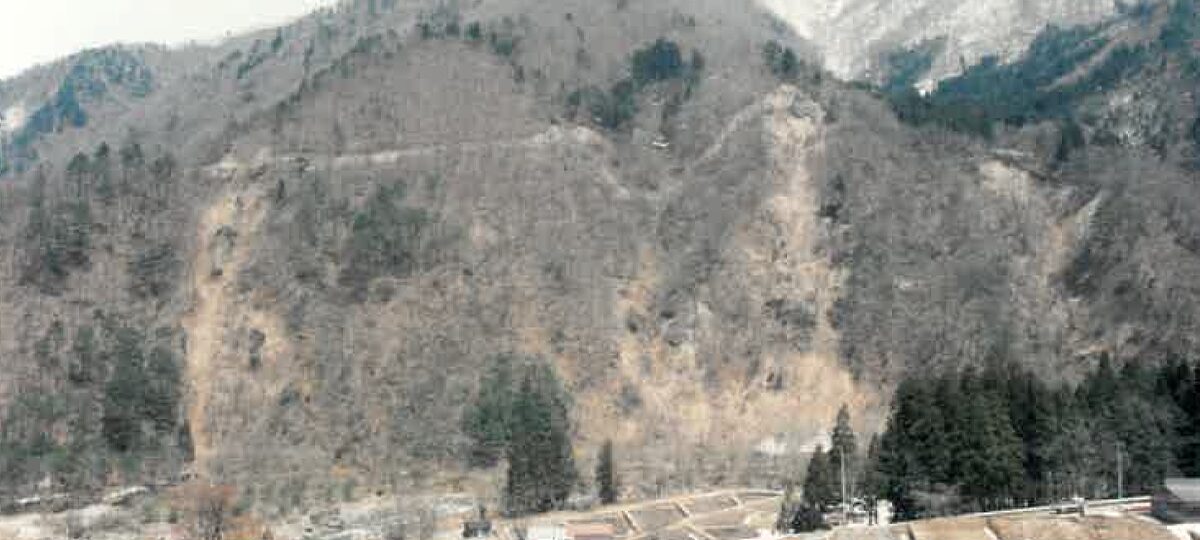
Sliding thatch down slopes of about 50 degrees
In the past, the people of Shirakawa transported large amounts of thatch from the mountain fields down to the village using methods called “mukade” (centipede) and hikigiri. Both made use of the natural slopes of the mountains: mukade relied on steep slopes, while hikigiri was carried out in early spring, using snow-covered slopes. The mukade truly resembled a giant centipede. A straight oak log about five meters long served as the central shaft, with around 100 bundles of thatch stacked alternately on either side and tied together with ropes. Once assembled, the mukade was pulled forward and released to slide downhill. As it gained speed, the carriers would leap onto the back and ride it all the way down in one swift descent.
Mukade (Centipede)
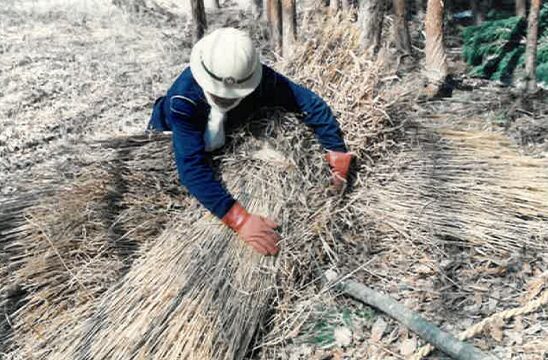

Thatch bundles are divided three at a time to the left and right around the central pole and stacked.
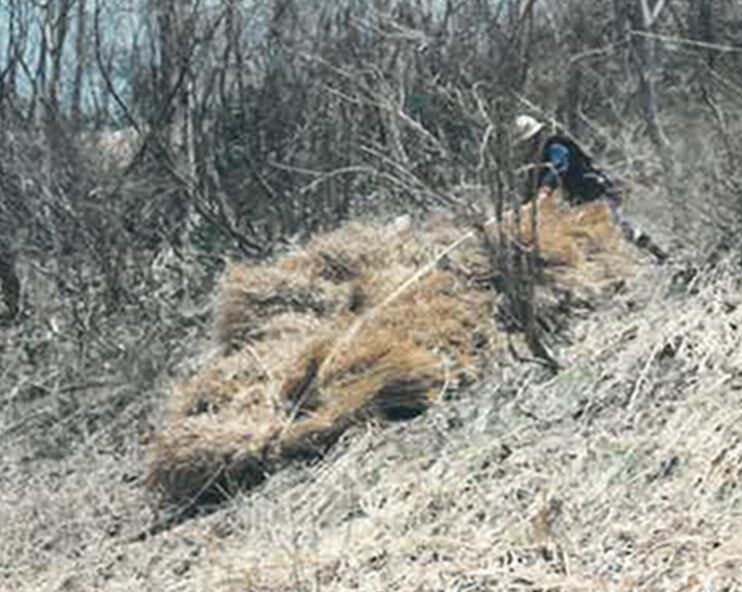
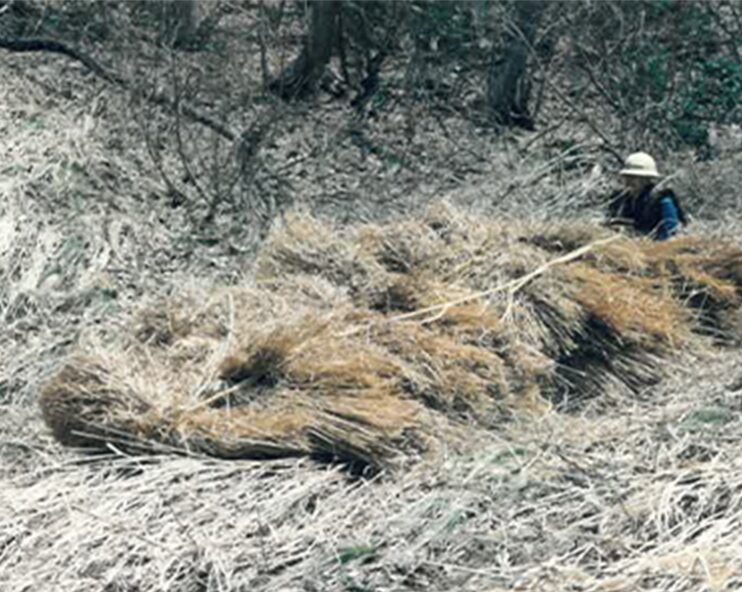
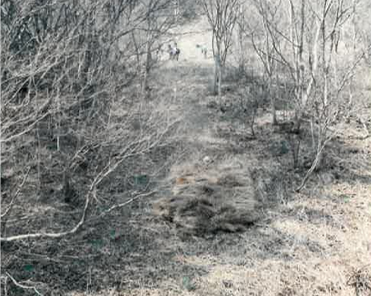
The mukade is released to slide downhill, and the carriers jump onto the back.
Hikigiri

Transporting by sliding down snow-covered slopes.
The hikigiri method made use of snowy slopes for carrying thatch. About 25 bundles of thatch were stacked alternately and tied together into one large unit. Several of these units were then bound together with ropes, forming something like a train of thatch bundles. To make them slide smoothly, each bundle was fitted underneath with a flat wooden board about 15 cm wide, similar to a ski. Once pulled out and set in motion, the carriers would jump on and ride the load, sliding down through winding and uneven mountain terrain.
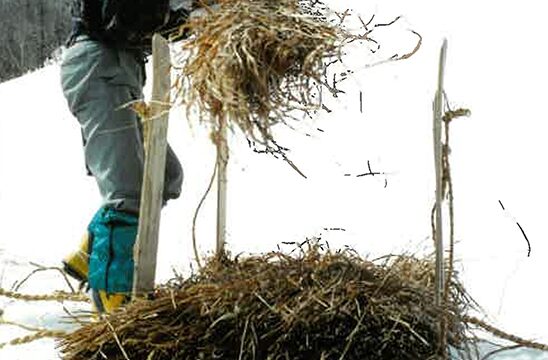
Thatch bundles are stacked alternately between the wooden boards.
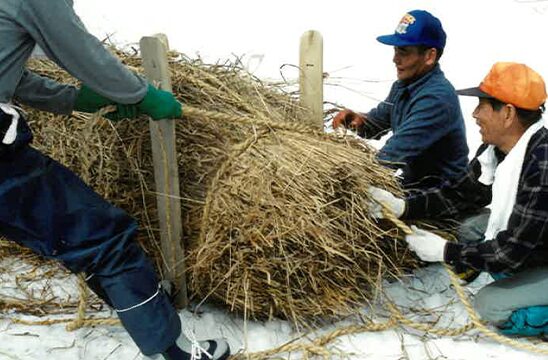
Thatch bundles are stacked alternately between the wooden boards.
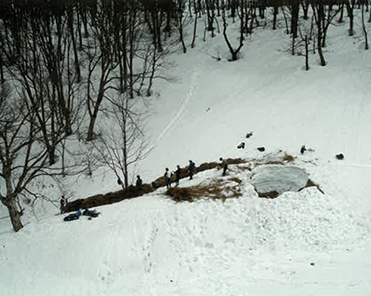
The hikigiri bundles are tied together in sequence, completing the formation.
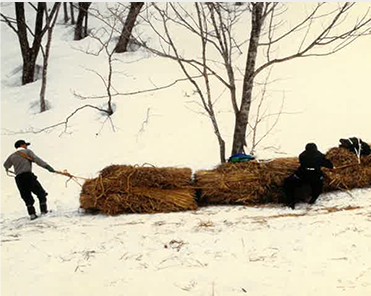
The hikigiri is pulled out.
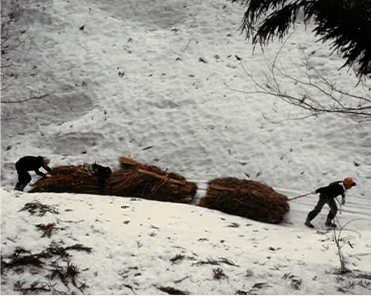
On flat sections, it is dragged forward by hand until the slope resumes.